Oak Park Epoxy Flooring brings more than 20 years of epoxy-flooring work to Alsip, and this page is about a narrow strip of floor that food warehouses care about more than most owners expect. It is the light band along the walls, the part of the slab an auditor walks first. Getting that band to stay light, intact and easy to sweep is a coating question as much as a housekeeping one.
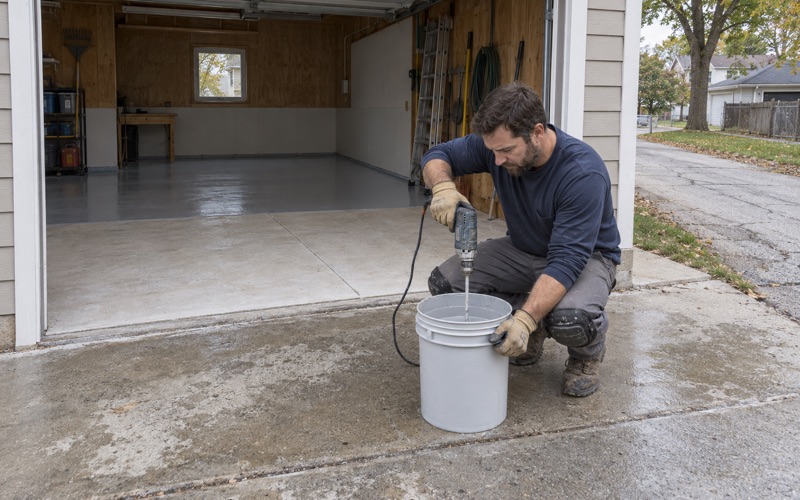
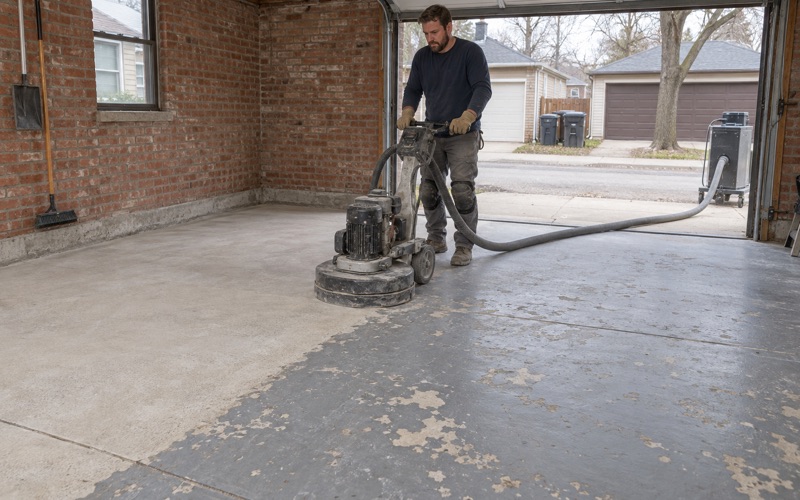
Our method starts the same way on every slab. We open the concrete with a diamond grinder or a shot blaster rather than an acid etch, we quote moisture testing as its own line item, and we write the product, the system build and the finished thickness into the proposal so the floor that goes down can be checked against the paper.
Before pricing anything, we also read the existing cracks and any old coating, and we tell an owner plainly when a slab needs repair or replacement first. Warranty exclusions get read aloud at the start of the conversation, with moisture named at the top of the list.
A Food-Grade Warehouse on Central Avenue and Its Wall Band
The building at 11859 S. Central Ave
Alsip is a village in Cook County with a population of 19,063 at the 2020 census, and its industrial side includes a large public warehouse on Central Avenue. CoStar reported in July 2017 that First Logistics, described as a public and contract warehousing company, renewed its full-occupancy lease of a roughly 264,000-square-foot facility at 11859 S. Central Ave. Warehouse marketplace and directory listings describe the building as food grade and list food and beverage among its product categories.
One directory mails the address as Merrionette Park, but the address geocodes inside the Village of Alsip, in Worth Township, Cook County. That matters for planning, because the Village of Alsip Building Department and the Alsip Fire Department are the local authorities, not a neighboring town’s offices. We name First Logistics only as a local example of the building type; we have not read its audit scheme, its floor markings or its floors.
Why the band runs along every wall
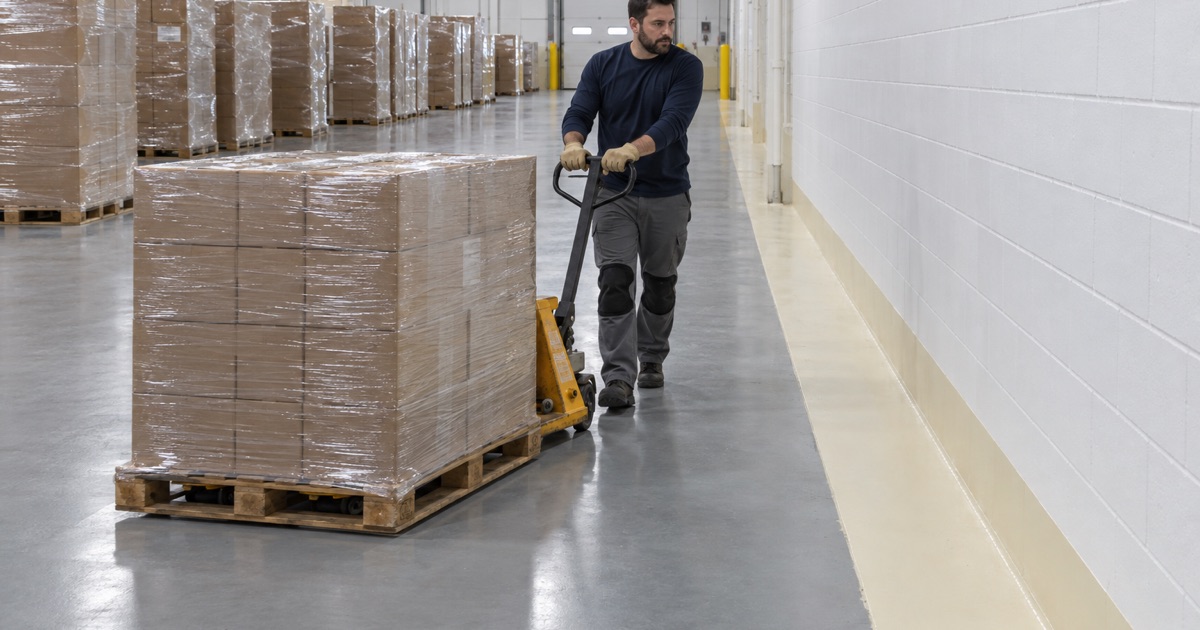
Food-grade warehouses commonly keep stored product about 18 inches off the walls. Trade and audit sources give the reason: the strip has to stay clear so staff can sweep it, inspect it and monitor the rodent devices placed along it. A forum quotation of the AIB Consolidated Standards lists storage at least 18 inches from walls as a critical requirement, though that quotation comes from an older edition.
The 18-inch perimeter is audit practice rather than a federal measurement. FDA’s rule sets no width for it, and we never present the stripe as a legal requirement. What the stripe does is give an inspector a defined place to look and give a sanitation crew a defined place to clean.
Why it is painted light
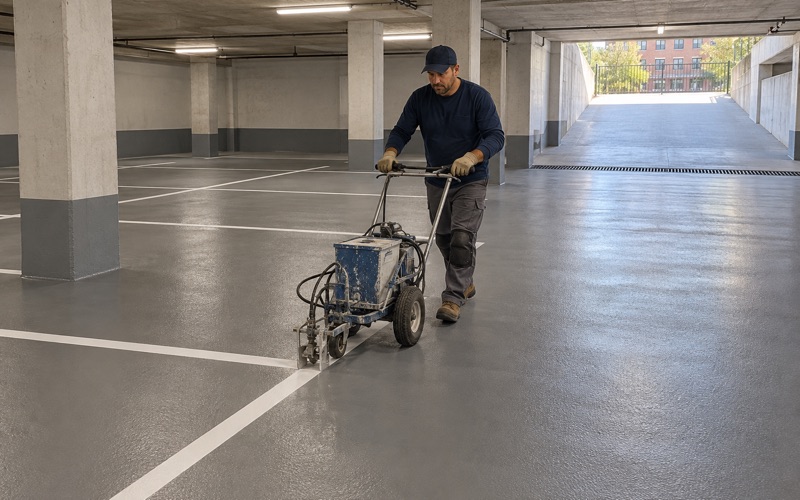
Rodents travel along walls, and a pest-management trade article notes that if these lines are white or light in color, droppings can be easily spotted. That is the whole job of the light band: contrast for inspection. A painted line is no substitute for a pest-control program, so we describe it only as a surface that makes evidence easier to find.
Looking for epoxy-flooring closer to Winnetka? See Epoxy-Flooring Services in Winnetka.
What FDA’s Plant-Construction Rule Asks of a Floor
The text of 21 CFR 117.20(b)(4)
FDA’s current good manufacturing practice rule, at 21 CFR 117.20(b)(4), says plants must be constructed so that floors, walls and ceilings may be adequately cleaned and kept clean and kept in good repair. The same section asks that aisles and working spaces between equipment and walls stay adequately unobstructed and of adequate width. It names no color and no stripe; the duty is cleanability and repair.
Storage-only facilities are still covered
Some warehouse owners assume a storage-only building sits outside the rule. Section 117.7 exempts a facility solely engaged in the storage of unexposed packaged food from subparts C and G, and it modifies subpart D. It does not exempt subpart B, which is where 117.20 lives, so the plant-construction language still reaches the floor.
For a warehouse owner, the practical reading is simple. The floor along the walls has to be one a crew can actually clean on schedule, and it has to stay in a condition where cleaning still works. A coating that peels, a joint that opens or a patch that crumbles moves the floor away from that standard one defect at a time.
What good repair means on a slab
On concrete, good repair is a practical test rather than a phrase. A spalled joint, a chipped coating edge or a pitted patch holds dust and spilled product that a broom slides right past. A floor that started cleanable and has been allowed to break down no longer meets the standard it was built to, which is why we treat repair as part of the coating scope rather than an afterthought.
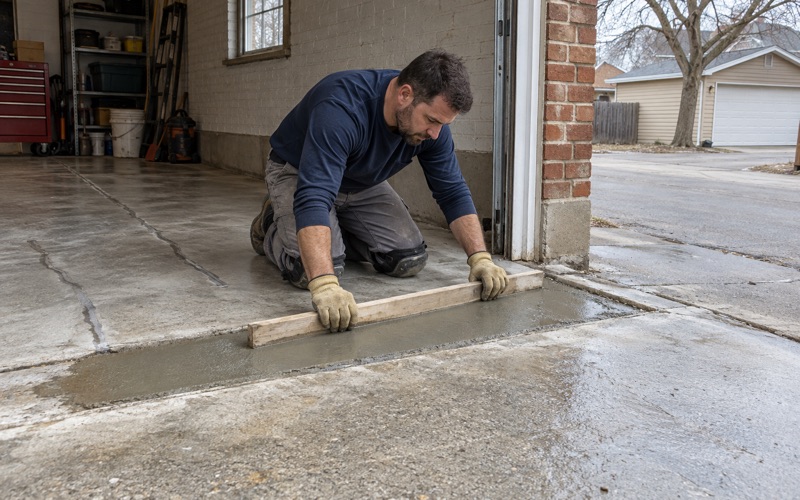
That is also why we read the slab before quoting. Cracks get classified, old coatings get checked for adhesion, and if a section needs repair or replacement before it can carry a coating, the proposal says so in writing. A light stripe applied over failing concrete looks tidy on the first day and stops looking that way within a season.
Keeping the Perimeter Band Light Under Pallets and Wet Cleaning
Why a painted stripe wears off
A stripe of floor paint rolled onto bare or dusting concrete is the common version, and it is the version that fails. Pallet-jack wheels scuff it, forklift tires turning near the band grind at it, and wet cleaning lifts what little bond it had. Within months the line is patchy and stained, and a stained light band defeats its own purpose because it no longer shows what it is meant to show.
Wet cleaning adds a second problem. Water that gets under a lifting edge carries dirt with it, and the stain then spreads from underneath where no mop can reach. A band that is bonded to profiled concrete and sealed along its edges gives water nothing to get behind.
Preparing the slab so the band holds
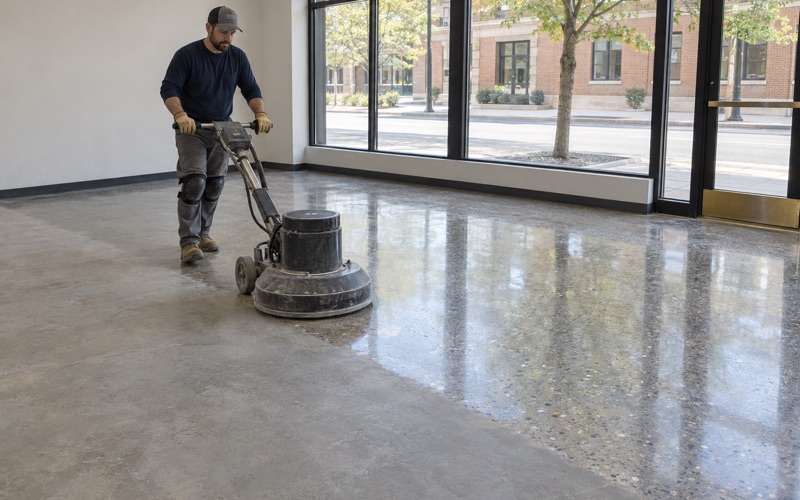
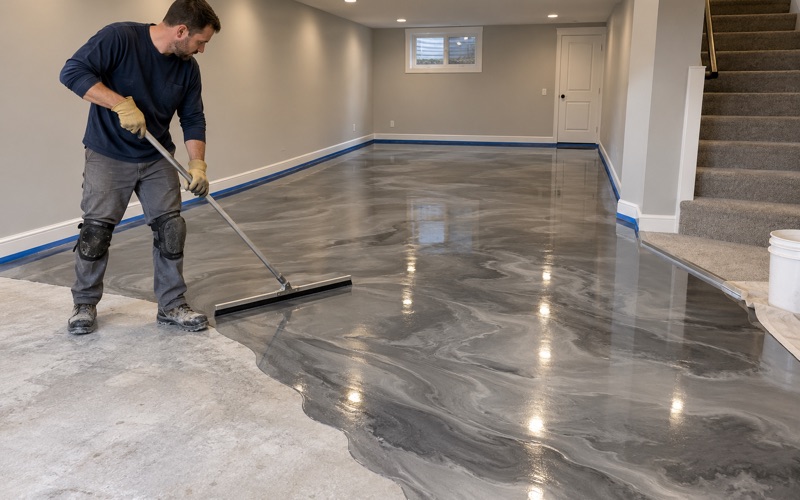
We open the surface mechanically with diamond grinding or shot blasting, to an ICRI CSP profile matched to the system going down. No acid touches the slab. A mechanically profiled surface gives a 100% solids epoxy something real to grip, and the grinding removes the laitance and old paint that a rolled stripe would otherwise sit on.
Moisture comes next, and it is written into the scope rather than sold after a failure. Depending on the slab, that means ASTM F1869 calcium chloride testing, ASTM F2170 in-situ relative humidity probes, or an ASTM D4263 plastic sheet test as a first screen. Where readings run high, a moisture-mitigation primer goes under the system so vapor does not push the band off the slab later.
Building the band and the field
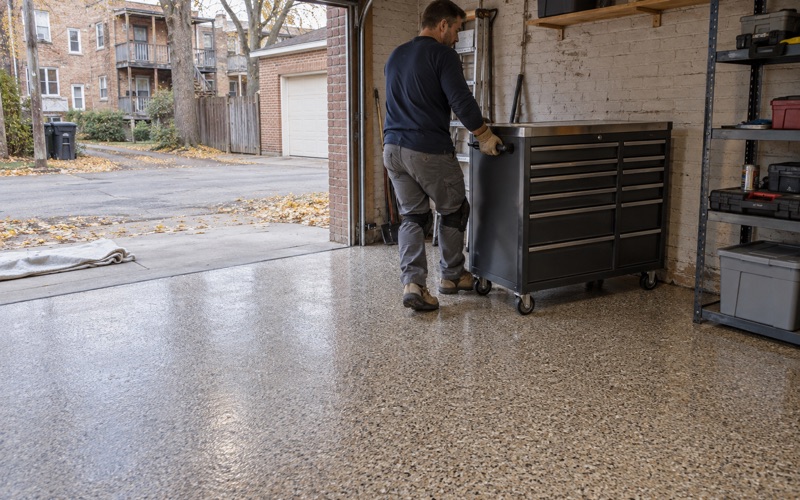
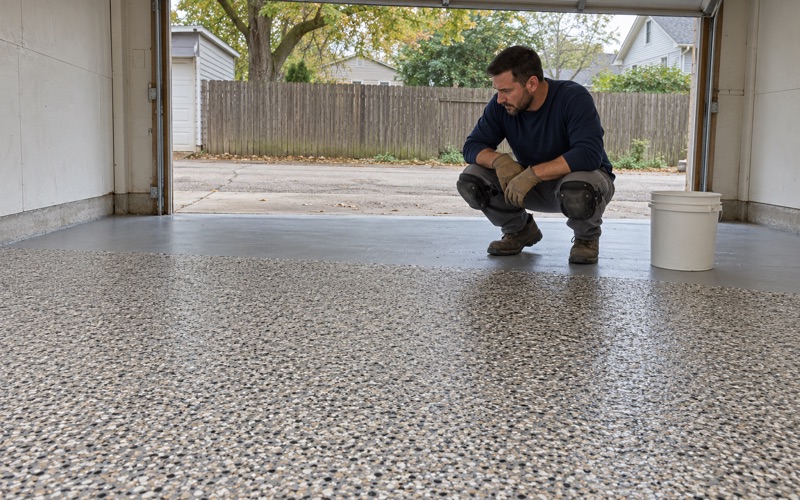
The perimeter band can be a light-colored epoxy body coat under a polyaspartic or polyurea topcoat chosen for abrasion and repeated cleaning, while the field inside it carries a darker color. Where wet cleaning makes the floor slick, a fine quartz aggregate broadcast adds grip without building a texture that traps debris. The proposal names the product, the build and the finished thickness for both areas.
Curing is scheduled against slab temperature and the dew point spread at the slab surface, not against a calendar date. A cold floor near a dock door cures more slowly than one in the middle of the building, and amine blush can form when the surface sits too close to dew point. We tell an owner which zones need heat or extra time before pallets return.
The Wall Joint and the Forklift Floor Inside the Band
Sealing where the floor meets the wall
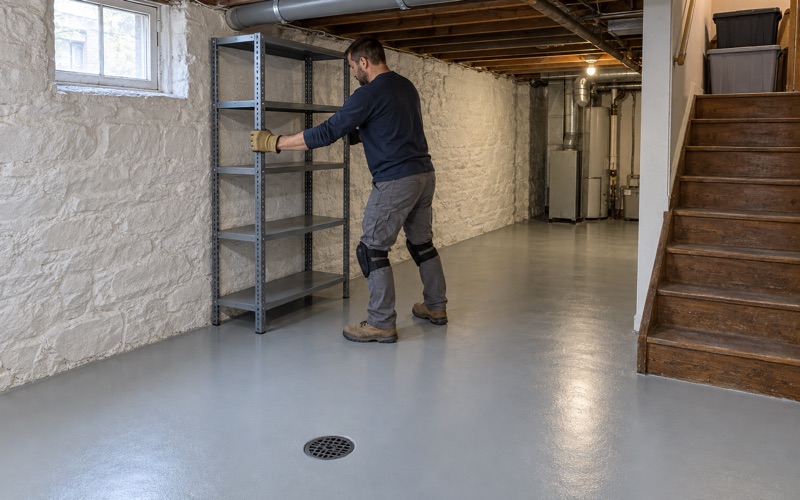
Behind the band sits the wall-floor junction, and an open joint there is a dirt trap no broom reaches. We clean out the joint, fill it with a compatible sealant or build a cove detail, and carry the coating up to it so debris has no crack to collect in. FDA Food Code 6-201.13 describes coved floor and wall junctures for food establishments, and the same thinking serves a warehouse perimeter well.
Racking, forklifts and the field
Inside the band, the floor carries ordinary forklift and racking loads. Rack base plates and anchor holes need sealed edges so the coating does not peel back from them, and drive aisles need a topcoat that resists hot tire pickup and abrasion. Control joints are filled so wheels do not chip their edges, which is often where a warehouse coating first starts to break down.
Where the band meets the field, the color change should be a clean, straight edge rather than a feathered overlap. We mask and cut that line so a scuffed stretch can later be recoated along the same boundary without redoing the whole aisle. Keeping future repair simple is part of keeping the floor in good repair.
Working around a building that keeps running
A public warehouse does not close for a floor project. We stage the work in zones, often overnight or across a weekend, so product can be moved off one wall line, the band coated and cured, and the racks reloaded before the next section starts. Grinding dust is collected at the machine and never washed toward a floor drain.
Before scheduling, we confirm the Village of Alsip’s own contractor rules, because Illinois issues no state license for flooring or coatings work and the village collects a contractors license fee. Coatings are chosen within the Illinois VOC limits in 35 Ill. Adm. Code Part 223 Subpart C, which bind the installer as well as the manufacturer. The building’s own quality and safety staff set the food-safety rules for the job, and we work inside them.
If an Alsip facility has a perimeter band that keeps wearing off, the first step is a site visit. We read the slab, test it for moisture, and put the system, the build and the finished thickness in writing before any date goes on the calendar.
- 20+ Years Coating Concrete
- Moisture Tested Before Quoting
- Written Contract on Every Home Job