Oak Park Epoxy Flooring has spent more than 20 years on epoxy flooring in Bensenville and the suburbs around it, and the requests that come from this village tend to involve working floors rather than showpieces. In a fulfillment room, a coating earns its keep in the minutes after something breaks. The real questions are whether the spill stays on the surface and whether a broom can find every fragment.
That makes the choice of finish less about color and more about texture, absorbency and how the floor gets cleaned in the middle of a shift. A heavy grit that grips a boot can also hold slivers of glass, while a bare slab drinks whatever reaches it. We spend most of our planning time on that trade-off, working through the building one room at a time.
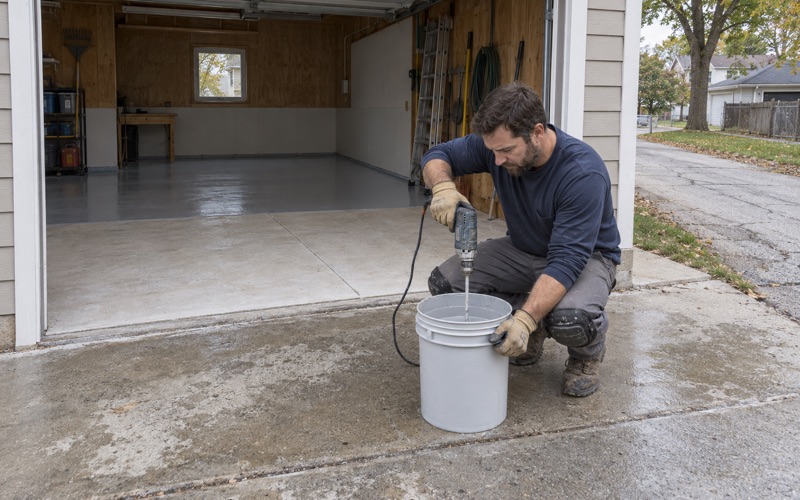
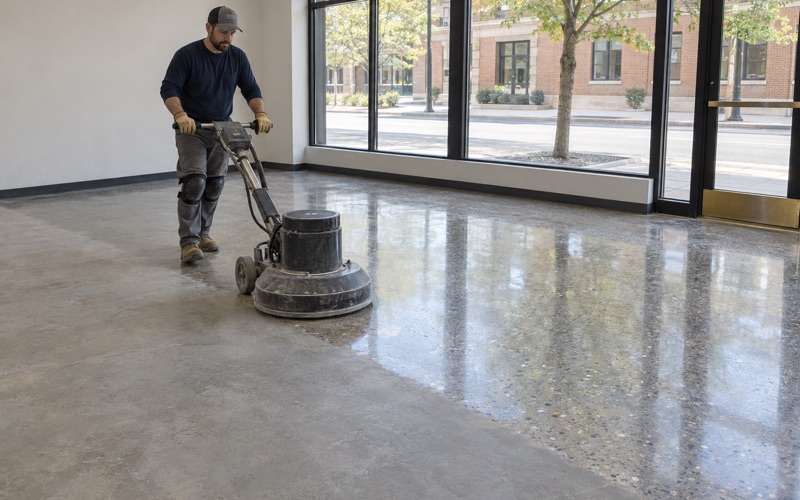
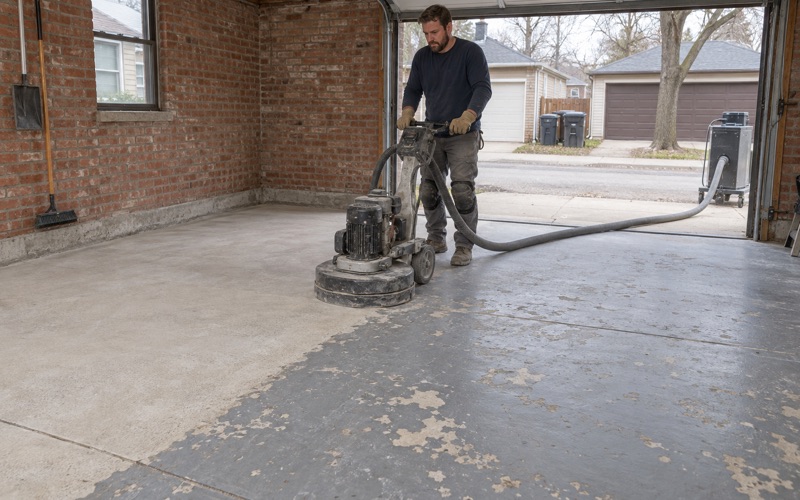
Every system we install starts with a slab opened mechanically, using a diamond grinder or a shot blaster, and never an acid etch. Our written proposal names the product, the system build and the finished thickness, so an operations manager can check what went down against what was quoted. Moisture testing sits in that scope as its own line item.
An Alcohol Fulfillment Warehouse on York Road
What the Building Handles
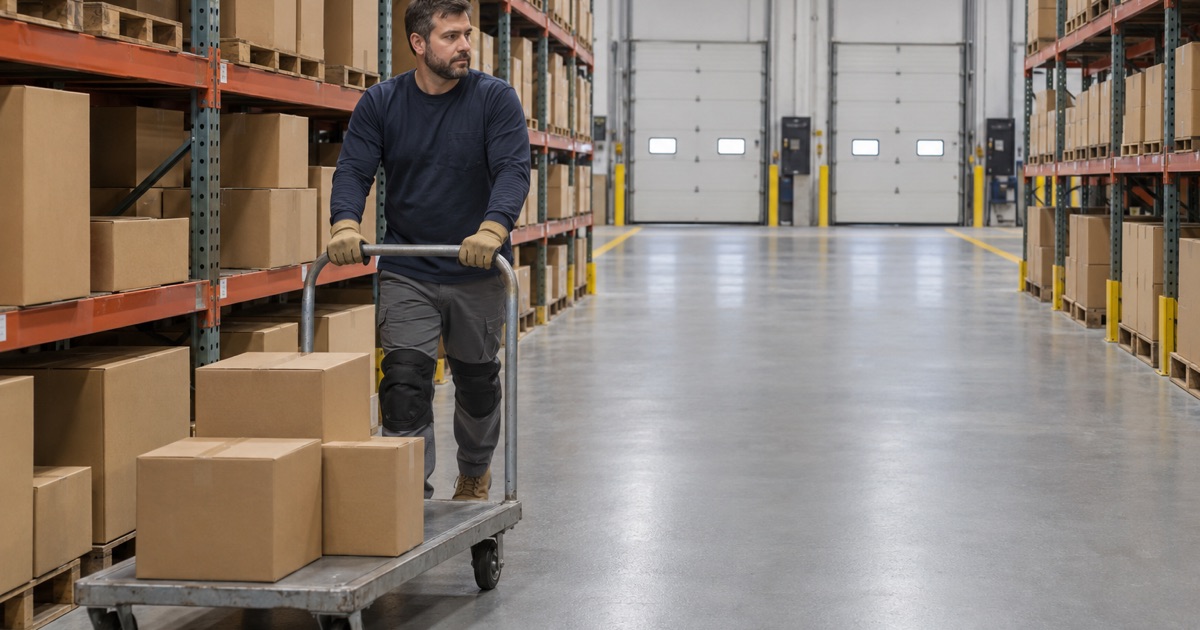
Logistics Plus runs a Chicago warehouse at 220 N. York Road in Bensenville, and its August 8, 2023 release describes over 190,000 square feet of storage and fulfillment space under 32-foot ceilings, with more than 20 loading docks. The company says the building is properly licensed to handle the warehousing, distribution and fulfillment of all alcohol products. Pick, pack and ship services run alongside the pallet storage.
The same release announced a racking system adding 5,000 pallet positions, designed for both standard pallets and super sacks, plus a 4,000-square-foot cooler held between 40 and 60 degrees Fahrenheit. The address geocodes inside the village, in Addison Township, DuPage County. We describe it because it shows a kind of floor, not because we worked there; we have not seen its pick areas, product mix or finishes.
Why Fulfillment Differs From Storage
Pallet storage moves product in full loads, and a pallet is rarely opened until it reaches the next link in the chain. Fulfillment works the other way around: cases are broken down, single units are picked by hand, packed and shipped. Every unit handled is another chance for something to slip from a glove, and with glass containers that chance becomes an event on the floor.
The village employer roll leans toward moving goods, with a food-service distributor, a trucking company and three international freight forwarders among its largest names. A fulfillment room is the part of that picture where goods are handled one at a time rather than one pallet at a time. That is the floor this page is about, and it asks for different things than a storage aisle does.
Looking for epoxy-flooring closer to Hinsdale? See Hinsdale Epoxy-Flooring.
One Dropped Bottle: Glass, Liquid and Texture
Glass and Liquid Arrive Together
When a bottle breaks, the floor receives shards and liquid in the same instant, and each asks something different of the surface. The glass has to be swept up completely, down to the smallest slivers. The liquid has to be squeegeed and mopped before it spreads, and wine, beer or a sweet spirit leaves a tacky, staining film wherever it is allowed to dry.
On bare concrete, that liquid does not wait for the mop. The slab is porous, so part of each spill soaks in, darkens the surface and lingers as an odor and a sticky patch long after the visible puddle is gone. Over time, broken bottles in the same aisle can leave a stained track exactly where pickers turn most often.
What a Federal Rule Asks of a Workroom Floor
OSHA’s walking-working surfaces rule, 29 CFR 1910.22(a), asks that the floor of each workroom be kept clean and, to the extent feasible, dry. It also asks that walking-working surfaces stay free of hazards such as sharp or protruding objects and spills. A single broken bottle produces both conditions at once, which is why cleanability matters here as much as appearance.
A coating does not satisfy that rule on its own, and we never describe one as if it did. Compliance comes from the operator’s housekeeping program, its spill response and the people who carry them out. What the floor can do is make that program faster and more complete, so a cleanup crew finishes the job instead of leaving residue and fragments behind.
Why Texture That Grips Can Also Hold Glass
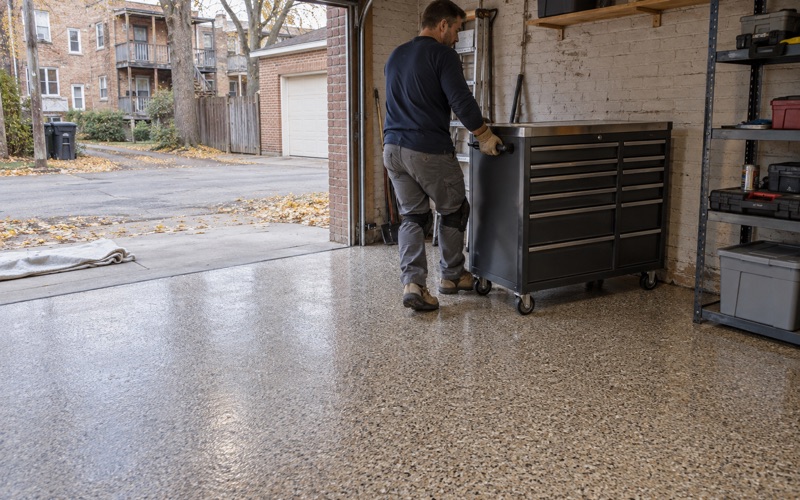
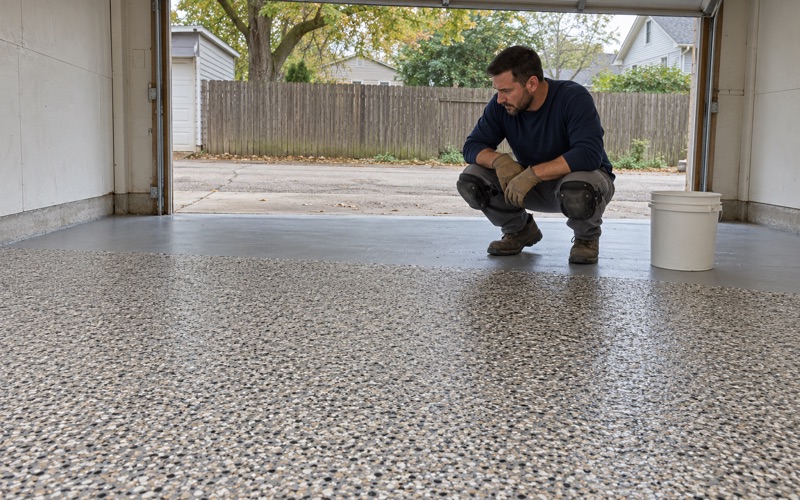
Most people asking for a warehouse coating want texture, and in many rooms that instinct is right. A full broadcast of quartz aggregate gives boots and casters something to bite into, especially where floors stay damp. In a pick zone, though, the same peaks and valleys that grip a sole will also trap small pieces of glass.
A broom rides over the high points and leaves fine fragments sitting in the low ones. Those fragments then work into mop heads, cart wheels and the soles of the next shift. A floor that looks swept can still be holding glass, which is the opposite of what a fulfillment manager needs after a breakage.
Choosing a Light Texture Instead
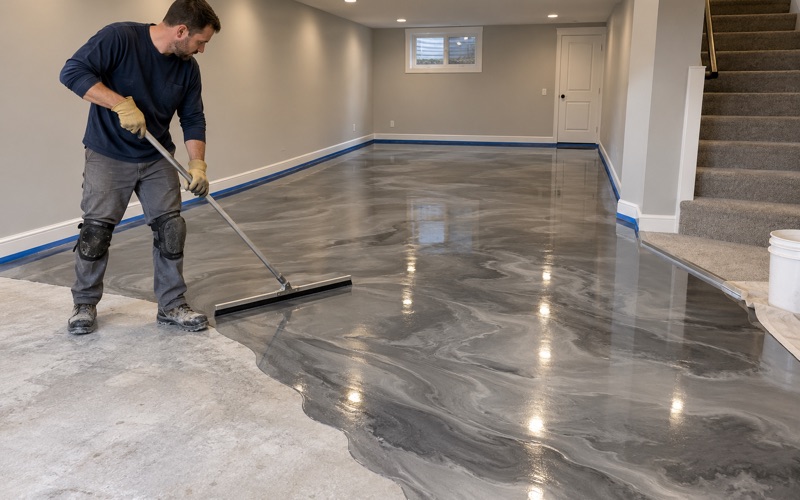
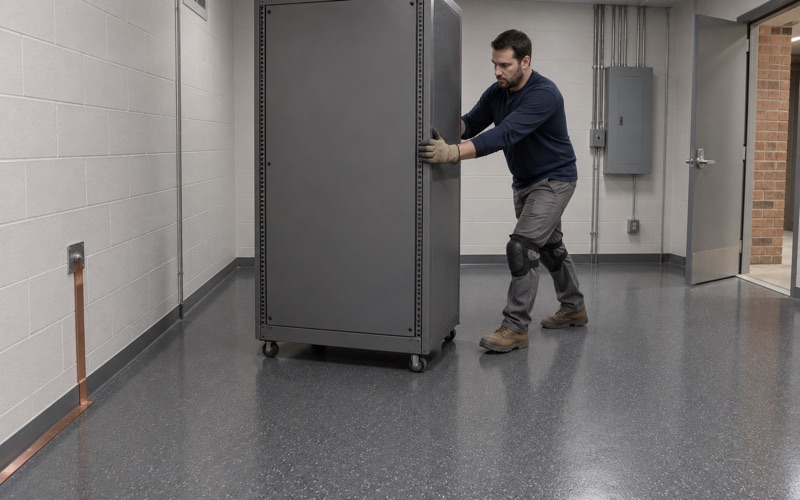
Our usual answer for these rooms is a smooth, seamless build with only a light texture, scaled to how wet each area gets. That can mean a fine aggregate scattered thinly into the topcoat rather than a full broadcast, or a texturing additive mixed into a polyaspartic or polyurea finish. The goal is a surface that a broom and dust pan can clear in one pass.
We lay out sample boards with two or three texture levels and ask the people who sweep and mop the floor to try each one. Their judgment usually settles the question faster than a data sheet. Any floor gets slippery under a fresh spill, and we say so plainly; texture lowers the risk, but it does not remove the need to clean.
Non-Absorbent Floors in Pick, Pack and Cooler Zones
Keeping Spills on the Surface
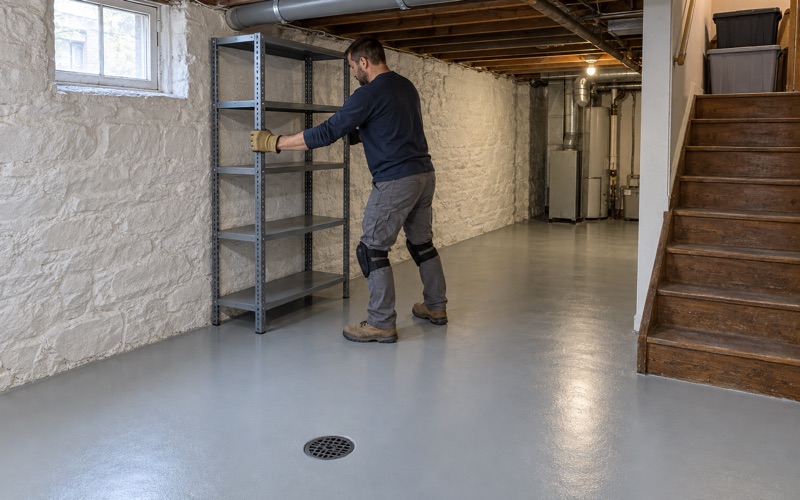
A seamless resin floor keeps a spill on top, where a squeegee can push it toward a drain or a mop can lift it. We typically build these rooms with a 100% solids epoxy body coat over a mechanically profiled slab, then a chemical-resistant topcoat that stands up to sugary residue and repeated cleaning. Joints and cracks are filled and detailed so liquid has no path back into the concrete.
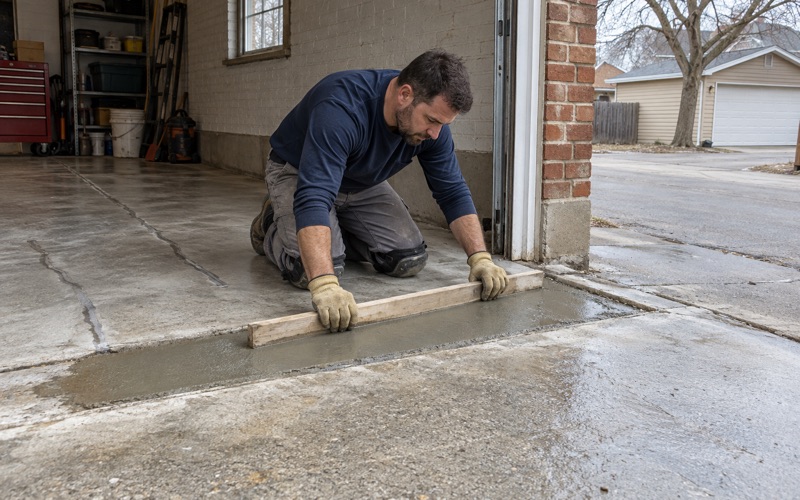
Before any of that, we read the cracks and the condition of any old coating, and we say plainly when a section needs repair first. A coating laid over a moving crack or a failing sealer simply reproduces the problem in a new color. We would rather price the repair honestly than install a floor we expect to lift within a few seasons.
Moisture Testing Before Coating
Pick floors often sit on older slabs with no record of what lies beneath them. We test with ASTM F2170 in-situ relative humidity probes, and where the scope calls for it, ASTM F1869 calcium chloride tests, before choosing a primer. If readings come back high, a moisture-mitigation primer goes into the proposal as a named line rather than a surprise added later.
We also read our warranty exclusions aloud before a job is sold, and moisture is the first one we name. A resin floor that blisters from vapor pressure below it is not a coating defect, and an owner deserves to know that before signing rather than after. Testing first is how we keep that conversation short.
Coolers and Cold Rooms
A room held between 40 and 60 degrees Fahrenheit is a different job from the ambient floor beside it. Resin systems carry a minimum substrate temperature, and the slab must sit far enough above the dew point to keep condensation off the surface during cure. We schedule against slab temperature and dew point measured on site, never against a date on the calendar.
In practice that may mean raising a cooler’s set point during preparation and cure, or coating it in its own window once the rest of the building is finished. We work that plan out with the operator ahead of time, including where the product goes while the room is out of service. Condensation on a cold slab is simply moisture arriving by another route.
Cleanup Routines the Floor Has to Support
Glass First, Then Liquid
A sensible breakage response follows the same order every time: isolate the spot, clear the glass, then deal with the liquid. The floor has to support each of those steps. A smooth surface lets a broom and dust pan collect shards without snagging them, and a non-absorbent one keeps the remaining liquid in a pool that a squeegee can move.
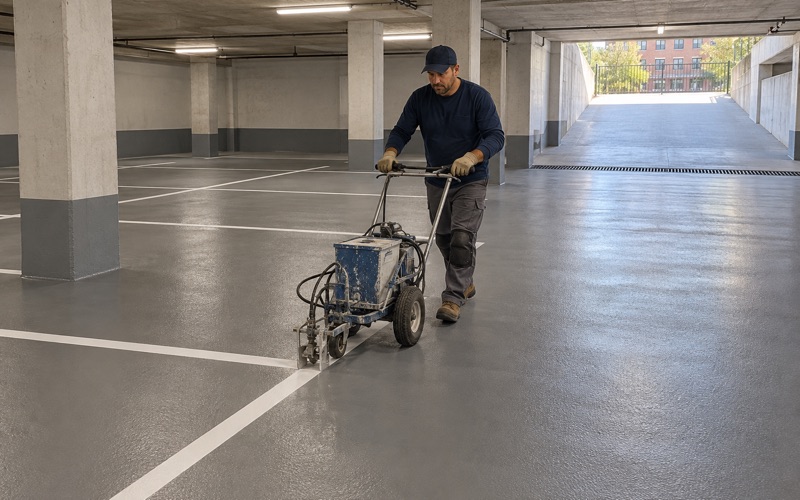
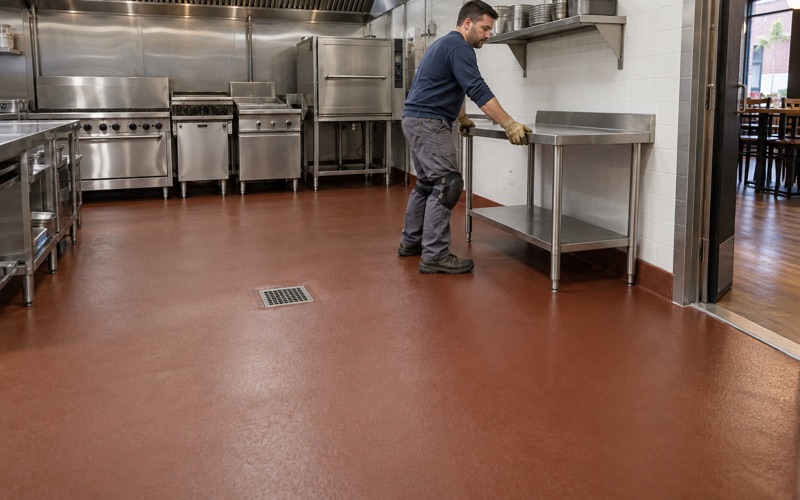
Color helps more than most people expect. A mid-tone gray or a lighter solid finish shows clear and green glass far better than a busy pattern, which can hide fragments as easily as it hides dirt. We usually steer pick zones away from a decorative vinyl flake broadcast for exactly that reason, and save flake for rooms where nothing breaks.
Mopping, Chemicals and Shift Timing
Fulfillment floors are mopped often, sometimes several times a shift around the busiest pick faces. The topcoat has to tolerate the operator’s cleaning chemistry, so we ask which products are in use and match the finish to them before ordering material. A surface that dulls or softens under a cleaner will start holding residue, and residue is what a mop leaves behind.
Because a working warehouse cannot stop, we schedule around its hours, often in overnight or weekend windows, and phase a large floor by zone so picking continues elsewhere. Grinding dust is collected at the machine rather than swept or washed toward a drain. Our coatings are chosen within the Illinois limit on VOC content, a rule that binds the installer as well as the manufacturer.
Who Signs Off in Bensenville
Illinois issues no state license for flooring or coating work, so before a Bensenville job is scheduled we confirm the village’s own contractor requirements with its Community Development department. The village spans DuPage and Cook counties, so any county review a food or beverage operation needs depends on which side the parcel sits. The York Road address sits on the DuPage side.
A floor will not make broken glass safe, and we will not tell a customer it does. What it can do is keep spills on the surface, let a broom finish the job and hold up to the cleaning that follows every breakage. That is the floor we build for pick-and-pack rooms in this village.
- 20+ Years Coating Concrete
- Moisture Tested Before Quoting
- Written Contract on Every Home Job