Oak Park Epoxy Flooring has spent more than 20 years installing epoxy flooring in Crestwood and the surrounding southwest suburbs, and some of the floors that teach us the most belong to print shops. The trouble on those floors is rarely forklift weight or abrasion. It is a material that lands wet, stays wet, and travels on the next pair of boots that crosses it.
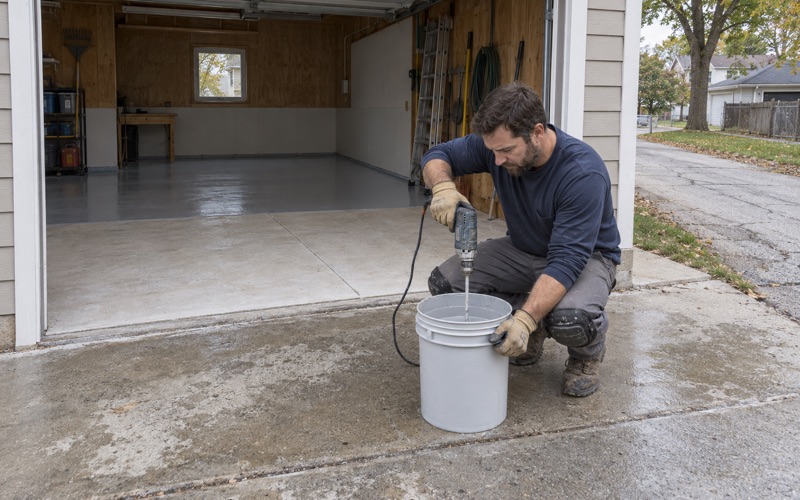
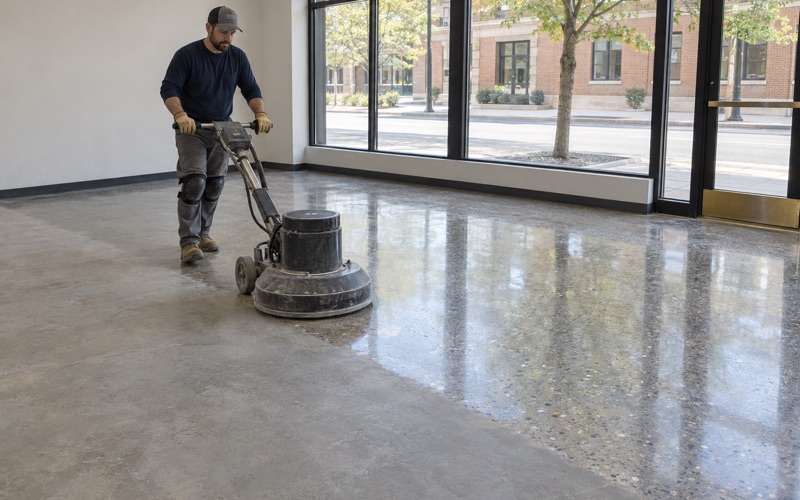
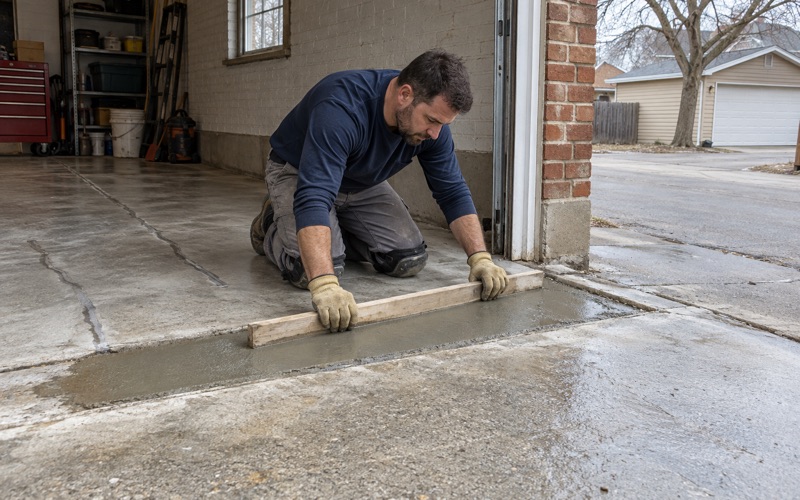
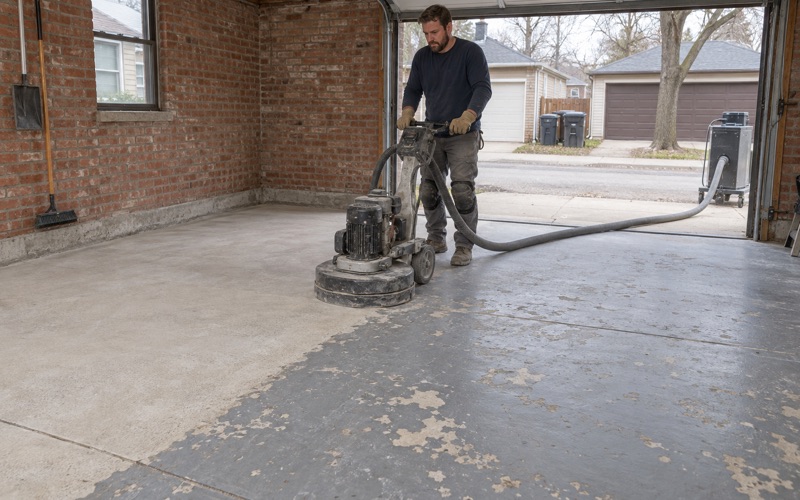
Before anything is applied, we open the slab mechanically with a diamond grinder or a shot blaster to a measured ICRI CSP profile, and we never acid etch. Moisture testing sits in the written scope as its own line, using ASTM F2170 in-situ relative humidity probes or ASTM F1869 calcium chloride tests, so the answer arrives before the coating does rather than after a blister.
The proposal names the product, the system build and the finished thickness, so an owner can check what went down against what was quoted. We also read cracks and any old coating before pricing, and we say plainly when a slab needs repair first. For a shop that prints apparel, that inspection usually starts where the ink lands.
A screen-printing plant on 136th Street
Apparel Redefined, a printer since 1970
Crestwood has a working screen-printing plant on 136th Street. Apparel Redefined, at 4611 W. 136th, started in 1970 as a garage-and-basement operation, moved to Bridgeview in 1977, and in 2018 settled into a 22,500-square-foot warehouse in Crestwood, funded partly by an SBA loan to expand its production equipment. The village’s own business database files it under manufacturing.
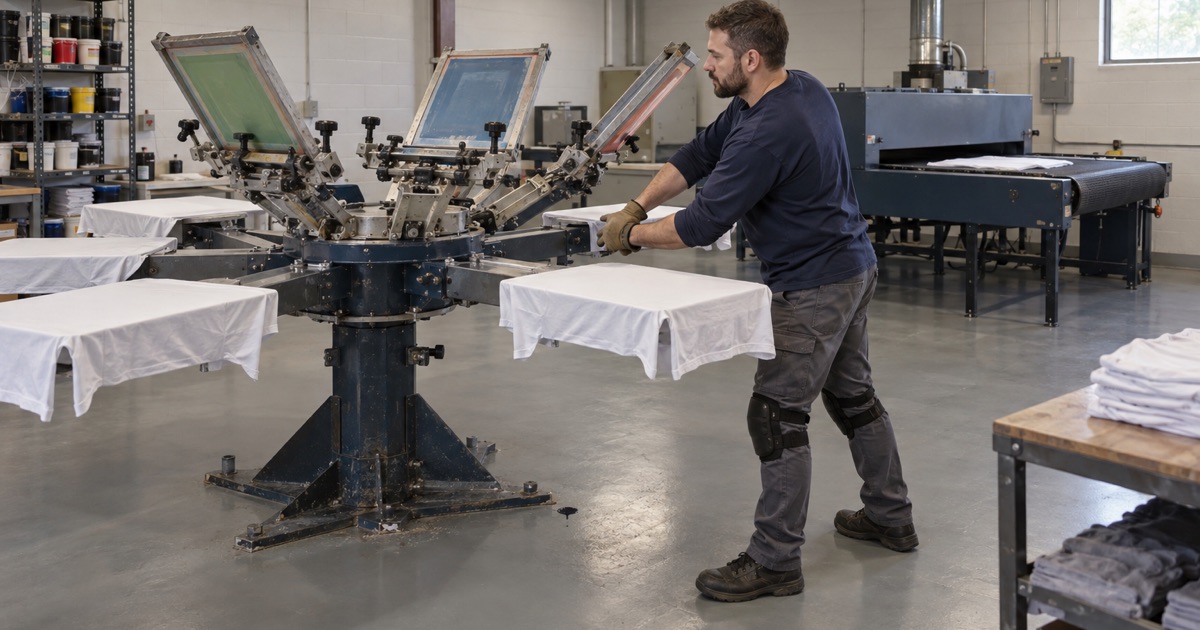
The shop runs manual and automatic presses alongside direct-to-garment, direct-to-film and embroidery work. Its job listings describe a manual press operator responsible for printing “from setup to clean up” and a screen prep tech who oversees the whole life cycle of the screens. Neither page says which ink the presses run, so what follows describes the trade, not this particular floor.
We have no relationship with the company and have never seen its floors. We name it because a working print plant on a Crestwood street shows that this floor problem exists here, not just in trade magazines. If you run presses yourself, the mechanism below is the part worth checking against your own floor.
Plastisol waits for heat
The standard ink in screen printing is plastisol, and trade press describes it as two ingredients: a resin and a plasticizer. At room temperature the liquid softens the resin just enough to leave a slightly tacky film, and GRAPHICS PRO put it bluntly in 2018: plastisol “will wait forever in that phase” until it reaches about 115 degrees.
Flashing gels it above 135 degrees, and a supplier’s guidance puts the full cure at a minimum of 320 degrees Fahrenheit held for at least one minute. That is why a print shop runs a conveyor dryer at all. It is also why a drip that misses the dryer is still tacky on the floor days after it landed.
Water-based and discharge inks behave differently, and a shop running several decoration methods may have more than one problem on the same floor. Direct-to-garment and direct-to-film work bring their own inks and powders into the room. We ask which processes run in which part of the building before we draw a single zone on the floor plan.
Looking for epoxy-flooring closer to River Forest? See Epoxy-Flooring in River Forest.
Tracked from press to dryer to packing
How one drip becomes a trail
A drip comes off a squeegee, a flood bar or the underside of a screen during a job change, and it lands where people work. A press operator steps in it, walks to the dryer, then to the folding and packing tables. Because the ink does not set, each step lays down a smaller copy of the original spot, and a single drop can draw a trail across the room.
That trail matters beyond appearance. A tacky film on soles can pick up lint and dust, and ink that reaches a packing area can transfer onto finished garments or cartons. Keeping the floor easy to clean is part of keeping the product clean. We treat the route from press to dryer to packing as one traffic lane when we plan a floor, not three separate rooms.
Why bare concrete holds the ink
Bare concrete is porous, and an ink that stays liquid has all the time it needs to work into those pores. Once it is down in the surface, scraping takes the top layer and leaves a stain, and the solvent used to chase it can carry the color deeper. Old press-room slabs can show this as a dark halo around each press station.
Coating over that contamination is a common way for a new floor to let go. Plasticizer that has soaked into a slab can keep a coating from bonding, so we grind past the stained layer, check the profile, and test any suspect spot before priming. If an old coating is already on the floor, we read how well it is holding before deciding whether it comes off.
What a sealed, smooth floor changes
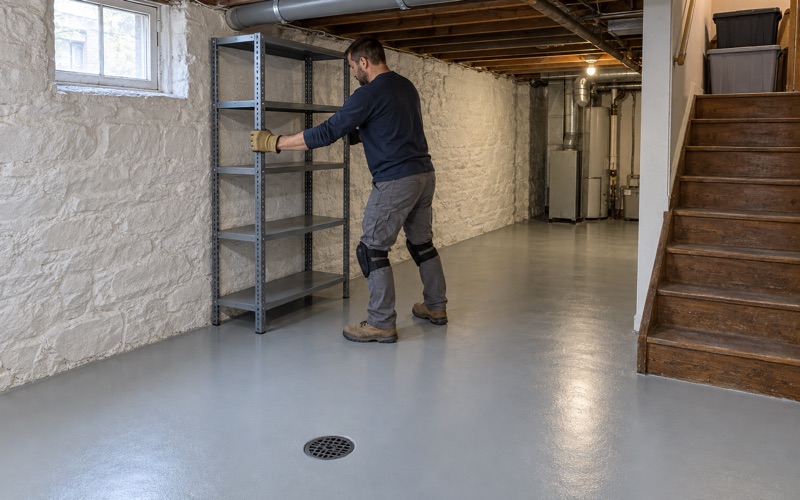
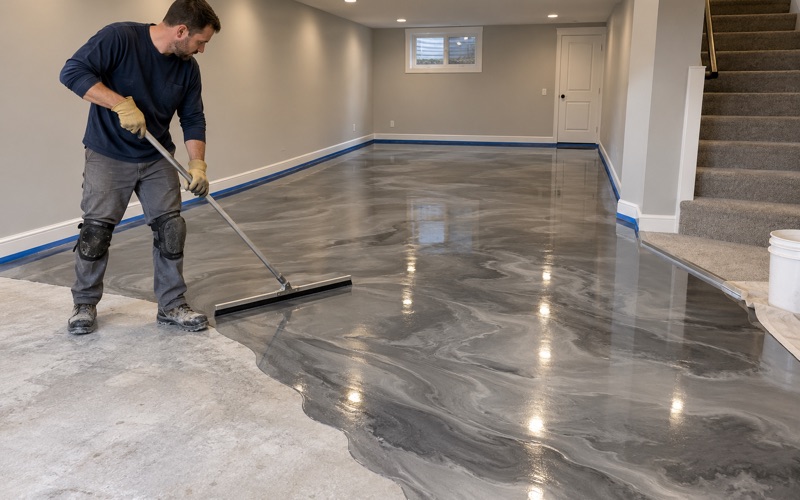
A sealed, smooth resin coating gives the ink nowhere to go. The film sits on top, where it can be lifted with a floor scraper and wiped with a rag and a compatible wash, and the spot is gone rather than ghosted into the slab. That is the whole value of the coating in a print room: not that ink never lands, but that it comes back up.
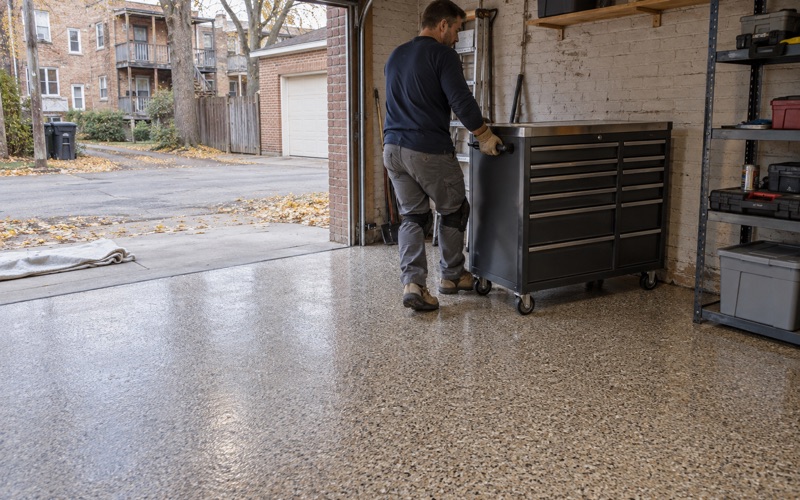
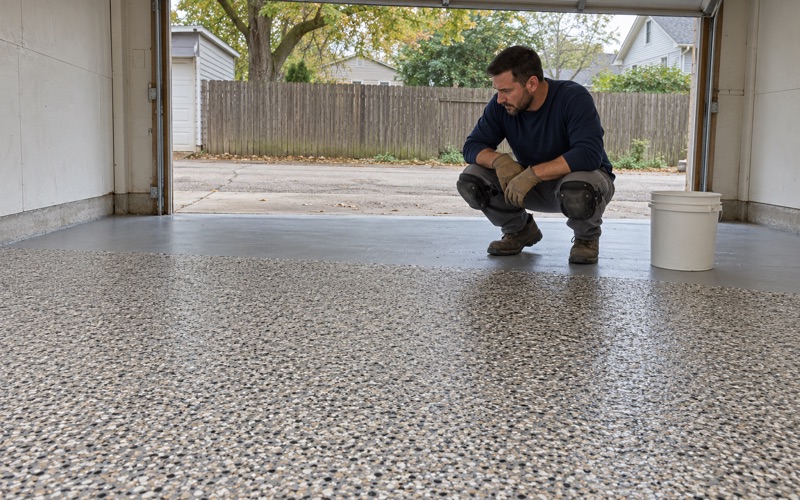
Texture is a trade-off here. A heavy quartz broadcast improves footing but gives a scraper ridges to skip over, so we usually keep the press zone at a fine, scrapeable texture and save the coarser finish for the washout area. In a print room we would typically specify 100% solids epoxy with a polyurethane or polyaspartic topcoat, named in the proposal by product and thickness.
Mineral spirits versus acetone: the cleanup decides the coating
Ink on the floor is only half the chemistry. The other half is whatever the shop uses to clean it, because that liquid touches the floor every day. Printers commonly clean plastisol from screens with mineral spirits or brand-name screen washes, and some of that ends up on the floor beside the press. Before we choose a system, we ask for the names of the washes on the shelf.
What one manufacturer’s chart shows
One resin manufacturer, Flowcrete, publishes a chemical resistance chart where 5 is the top rating and 0 means attacked. In its December 2021 edition, dioctyl phthalate and dibutyl phthalate, two common plasticizers, score a 5 on every column, from solvent-free epoxy coatings through polyurethane and vinyl ester. White spirit, the product sold here as mineral spirits, scores the same.
Acetone sits on the same chart with a 0 on every column. It is a quick way to cut ink off a tool, which is why a shop may keep a can near the press, and it is the one cleanup liquid on that list that the chart scores at 0 for every system. A shop that relies on acetone needs a different plan, or a different cleanup habit.
Reading the ratings honestly
These are one manufacturer’s immersion ratings for its own products, not a promise about every coating on the market, and no resin floor is untouched by everything a print shop can spill. We use charts like this to choose a system, then check the exact product’s data sheet against the washes the shop actually uses. Xylene shows why: it scores 1 on the water-borne epoxy and flexible polyurethane coatings and 5 on the standard polyurethane coating.
On a floor where acetone is part of the routine, the honest answer is a conversation, not a product. Sometimes the fix is moving acetone work to a tray or a dedicated mat, and sometimes it is accepting that a sacrificial topcoat will need renewal. We put that in writing along with the warranty exclusions, which we read aloud before the sale, moisture first.
The washout corner, the conveyor dryer and the village
Screen washout as a wet room
The screen washout and reclaim area behaves less like a press room and more like a wet room. Water, wash chemicals and dissolved emulsion run across the floor every time a screen is cleaned, so footing and drainage matter more than scrapeability. Here a coarser quartz aggregate broadcast earns its place, and the coating has to turn up the wall and seal tightly at the floor drain.
A wet area also tests the slab underneath. If a washout corner has run for years on bare concrete, we test that section for moisture separately and check whether the slab around the drain slopes correctly before quoting. Where it does not, we say so and price the repair as its own item.
Beside the conveyor dryer
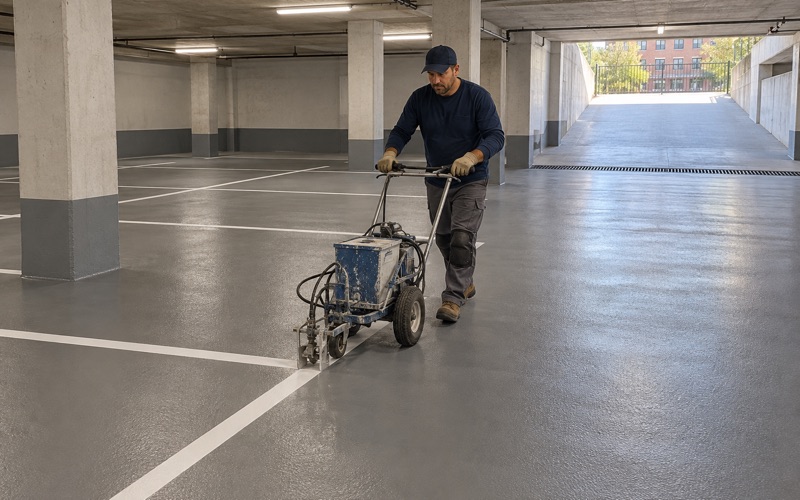
A conveyor dryer is a tunnel built to bring ink to 320 degrees, and the floor beside it sits next to that heat all shift. We make no claim that a resin floor tolerates dryer heat, and we would not run a coating under a dryer’s heating chamber. What we do is plan clearances around the unit, keep the coating to the walkways and loading sides, and confirm the manufacturer’s service-temperature limits before choosing a topcoat.
Dryers and flash units are also heavy, and moving one is a project of its own. We usually plan the coating around equipment that stays put, finishing the open floor first and working the edges of each unit on a shutdown day. Curing is timed to the slab temperature and dew point, not the calendar, so the press room is back in service when the coating is ready rather than on a guess.
Registering and permits in Crestwood
Illinois issues no state license for flooring or coatings work, so the local rules are the ones that apply. The Village of Crestwood requires contractors to register before working there, with a $100 fee for a general contractor and $25 for a subcontractor, plus an insurance certificate naming the village as additional insured. We register before a Crestwood job is scheduled.
The Building and Zoning Department at 13800 S. Cicero Avenue lists painting and carpeting as permit-exempt but does not mention floor coatings either way, so we ask rather than assume. Addresses printed with a 60445 ZIP can still sit inside the village, so we confirm the municipality before filing anything. For a shop on 136th Street, that means one call to the Building Department before the grinder arrives.
A print floor is worth planning before the next spill rather than after the stain. We will walk the press room, the washout corner and the packing lane, test the slab, ask what your crew cleans with, and put the system, the thickness and the exclusions in a written proposal you can hold us to.
- 20+ Years Coating Concrete
- Moisture Tested Before Quoting
- Written Contract on Every Home Job