Oak Park Epoxy Flooring installs flake epoxy floors in Oak Park, IL, serving surrounding cities including River Forest, Forest Park, River Grove, Bellwood and Brookfield. A vinyl flake floor is the system we install most often in garages, and in more than 20 years we have learned that its looks come from the blend and broadcast, while its life comes from the grinding and topcoat underneath.
A flake floor is built in layers: a pigmented epoxy base coat, decorative vinyl chips broadcast into that base while it is wet, and a clear topcoat that locks the chips in and takes the wear. The result is a textured, multicolored floor that hides dirt, salt residue and small imperfections.
Our proposals name the base coat, the flake blend and size, the broadcast rate, the topcoat and the finished thickness. That way you can check the floor that went down against the one you were quoted.
How a Flake Epoxy Floor Is Built
Grinding and Slab Preparation
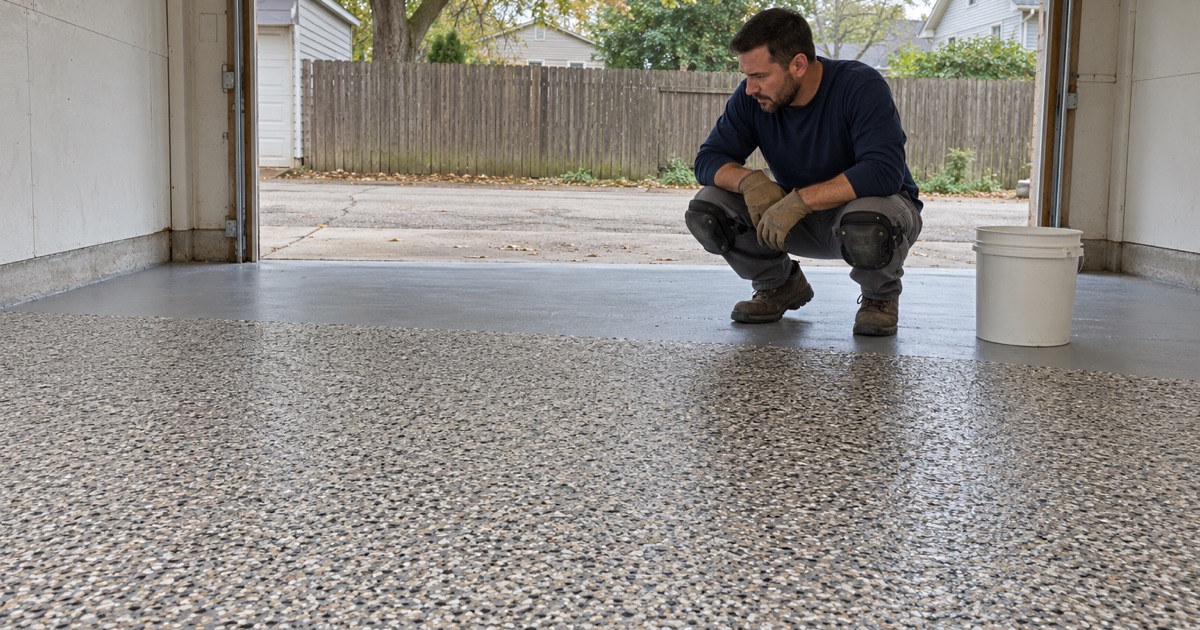
Every flake floor starts with mechanical preparation. We diamond grind the slab, or shot blast larger floors, to open the concrete and remove sealers, paint, oil and the weak surface layer, and we never acid etch.
Cracks are routed and filled, spalls are patched and the repairs are ground flush. The flake hides small cosmetic flaws, but it does not hide a weak bond, so the preparation is where the floor’s durability is decided.
Base Coat Color and Moisture Testing
The base coat is usually tinted to match the dominant color in the flake blend, so any gaps in the broadcast are invisible. We use a 100% solids epoxy for most base coats because it builds thickness and bonds deeply into ground concrete.
Before choosing the base, we test the slab for moisture with ASTM F1869 calcium chloride kits or ASTM F2170 relative humidity probes. A slab that tests high gets a moisture-mitigation primer first, because vapor rising from below can blister even a well-built flake floor.
Full Broadcast Versus Partial Broadcast
In a full broadcast, flake is thrown into the wet base until it refuses to take any more, leaving no base color visible. Once cured, we scrape and vacuum the loose chips and the floor has a dense, textured surface with the most depth and camouflage.
A partial broadcast scatters flake more lightly, letting the base color show between the chips. It gives a cleaner, more modern look and a slightly smoother surface, and it uses less material.
Clear Topcoats
The clear topcoat seals the flake, fills the texture to the level you want and takes the abrasion and chemical exposure. We usually use a polyaspartic or aliphatic urethane topcoat, which resists hot tire pickup and does not yellow in sunlight the way standard epoxy does.
The topcoat can be applied heavier for a smoother feel or lighter to leave more texture. We set that with you based on how the floor is used and cleaned.
Choosing Flake Color and Size
Blends and Color Families
Flake blends mix several colors of chips, from grays and blacks to tans, browns, blues and reds. Neutral gray and tan blends are the most popular in garages because they hide road grime and salt, while darker blends hide tire marks and lighter blends brighten a basement or a shop. We bring physical flake samples and broadcast boards so you can see blends on your own slab and under your own lighting.
Chip Size and Texture
Flake is commonly sold in sizes ranging from small chips that read like granite to larger chips that give a bold, speckled look. Larger chips hide dirt well and suit garages, while smaller chips give a finer, more refined appearance for basements and commercial interiors.
Chip size also affects texture. Larger chips create more surface relief under the topcoat, which adds grip but holds a little more dirt.
Where Flake Floors Make Sense
Garages in Cook County Winters
A flake garage floor faces calcium chloride brine, rock salt and slush every winter. The flake hides salt residue between cleanings, and a full-thickness topcoat with sealed edges keeps brine from working under the coating at the door and walls.
In detached garages, we schedule by slab temperature and dew point. An unheated slab in late fall or winter can be too cold for the base coat to cure properly, and we say when a job has to wait for spring.
Basements, Laundry Rooms and Workshops
In basements, a flake floor brightens the space, hides dust and gives a durable, cleanable surface for laundry rooms, workshops and storage. Moisture testing is especially important in older basements, along with removing old paint and adhesive before coating.
We coat up to floor drains and sump pits without covering or narrowing them, and we keep the slab’s existing fall toward each drain. A flake floor is a finish, not a water barrier, so where a basement has seen water rise through its floor drain we suggest dealing with the backflow question before the floor is coated.
Commercial Interiors
Offices, retail spaces, break rooms, locker rooms and corridors use flake floors for their durability and easy cleaning. Commercial flake systems often use smaller chips and a heavier topcoat for a smoother, more uniform surface that holds up to daily mopping.
Where a business cannot close, we phase the floor by area and work overnight or on weekends, with fast-curing topcoats where the return-to-service window is short. Safety lines, aisle markings and logos can be built into the system between the base coat and the clear topcoat.
Living With a Flake Epoxy Floor
Cleaning and Care
A flake floor is easy to keep clean: sweep or dust mop regularly and wash with a neutral cleaner. In winter, squeegee slush and brine toward the door and rinse the floor periodically so salt does not dull the topcoat.
Recoating and Warranty Terms
After years of use, a worn topcoat can be lightly abraded and recoated without replacing the whole floor. We read out the warranty exclusions before the job is sold, with moisture from below named first, so you know what the coverage does and does not include.
- 20+ Years Coating Concrete
- Moisture Tested Before Quoting
- Written Contract on Every Home Job