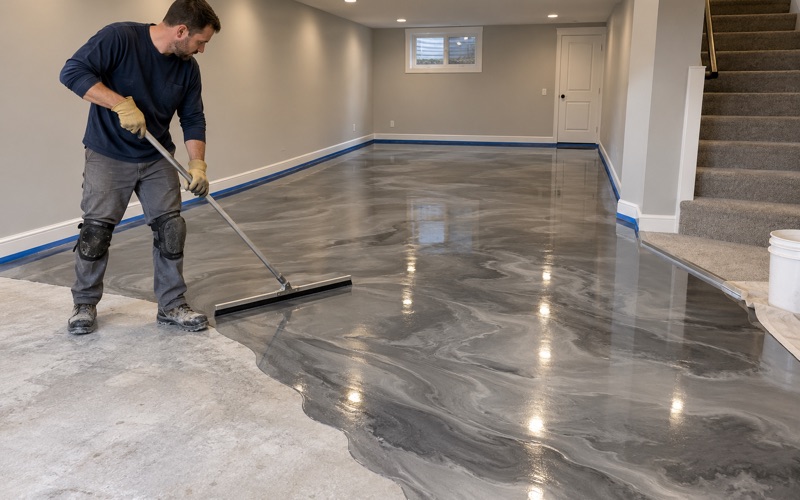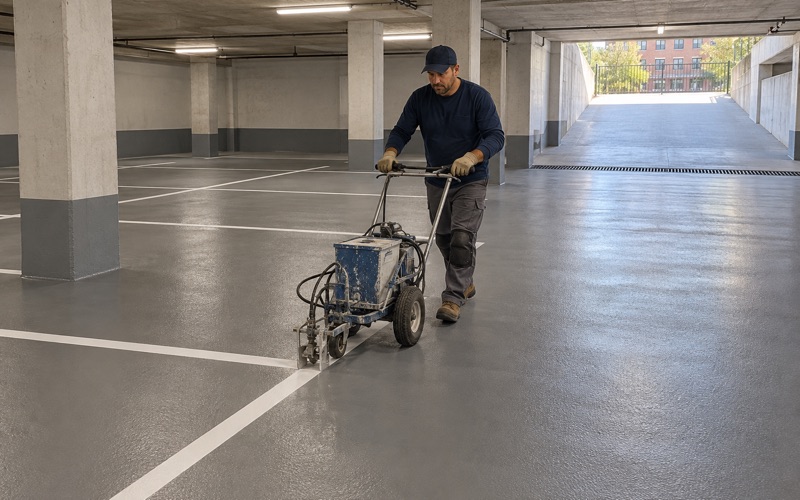
Oak Park Epoxy Flooring has spent more than 20 years on epoxy-flooring in Hinsdale and the surrounding western suburbs, and the floors that teach us the most are the ones cleaned with something harsher than a mop. A resin floor is judged by what it survives, and in some rooms that means a bleach-strength oxidizer, a neutralizer and a detergent, over and over. We build each system for the routine the floor will actually see.
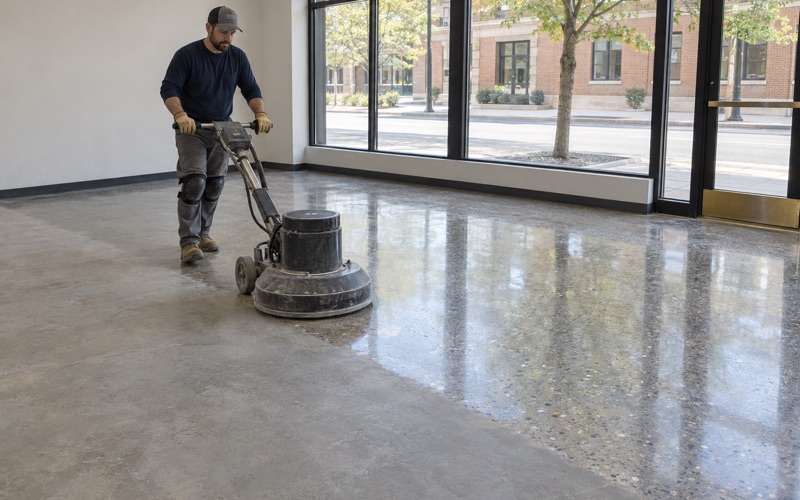
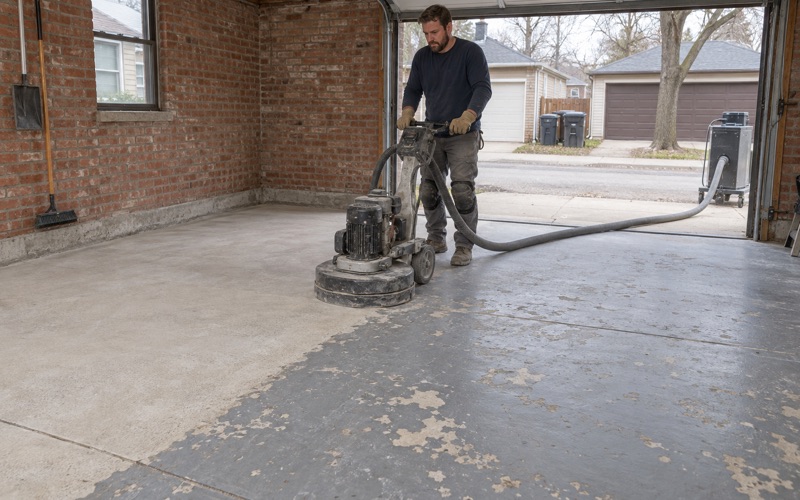
Every floor we coat starts the same way. The slab is opened mechanically with a diamond grinder or shot blaster, never acid etched, and moisture testing appears as a priced line in the scope instead of an afterthought. The proposal names the product, the system build and the finished thickness, so a facility manager or a homeowner can check what went down against what was quoted.
This page is about one kind of room in particular: the healthcare space where hazardous drugs are given and the floor is wiped for residue as well as dirt. The same reasoning, scaled down, also applies to a Hinsdale garage where chemicals have been stored and spilled for years.
An Infusion Center on Salt Creek Lane and What Wipe Sampling Finds
The UChicago Medicine AdventHealth Cancer Institute Hinsdale sits at 1 Salt Creek Lane, which geocodes to the York Township, DuPage County part of the village rather than the Downers Grove Township part where most of Hinsdale lies. Its published services include medical oncology, radiation oncology, imaging and lab work, along with an infusion clinic open Monday through Friday from 7:30 a.m. to 5:30 p.m.
We have no relationship with the institute, we have never seen its floors, and nothing on this page describes conditions inside that building. We name it because it makes a general point concrete. Where chemotherapy is given, the floor belongs to the cleaning program in a way an ordinary office or retail floor never does.
Drug residue on the floor
A 2010 conference abstract on antineoplastic drugs in a hospital, archived in the CDC’s Stacks library, reported wipe samples showing cyclophosphamide and taxol on pharmacy floors, infusion chairs and bathroom floors, as well as on the outside of drug waste containers. That hospital was not named and was not in Hinsdale. The finding still explains why floors sit inside a hazardous-drug cleaning plan at all.
Reviews linked to NIOSH note that no standard sets an acceptable surface concentration for these drugs. A facility compares its wipe results with its own baseline instead, so the floor has to clean back to that baseline again and again rather than simply look clean once.
Why the finish changes the result
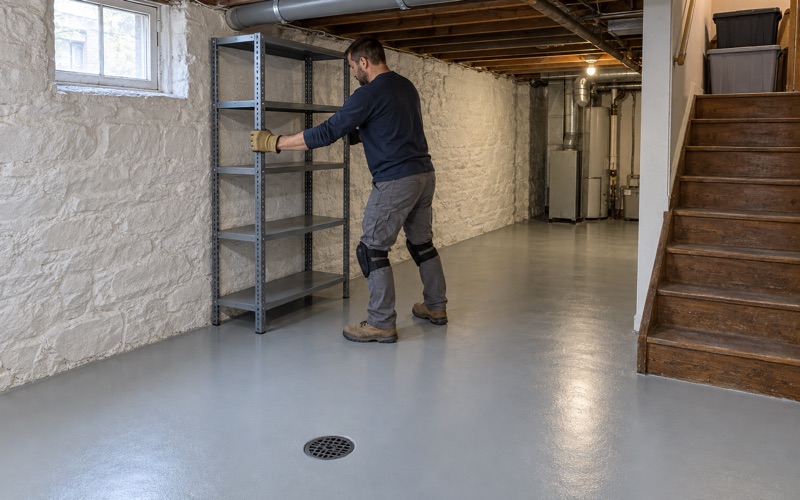
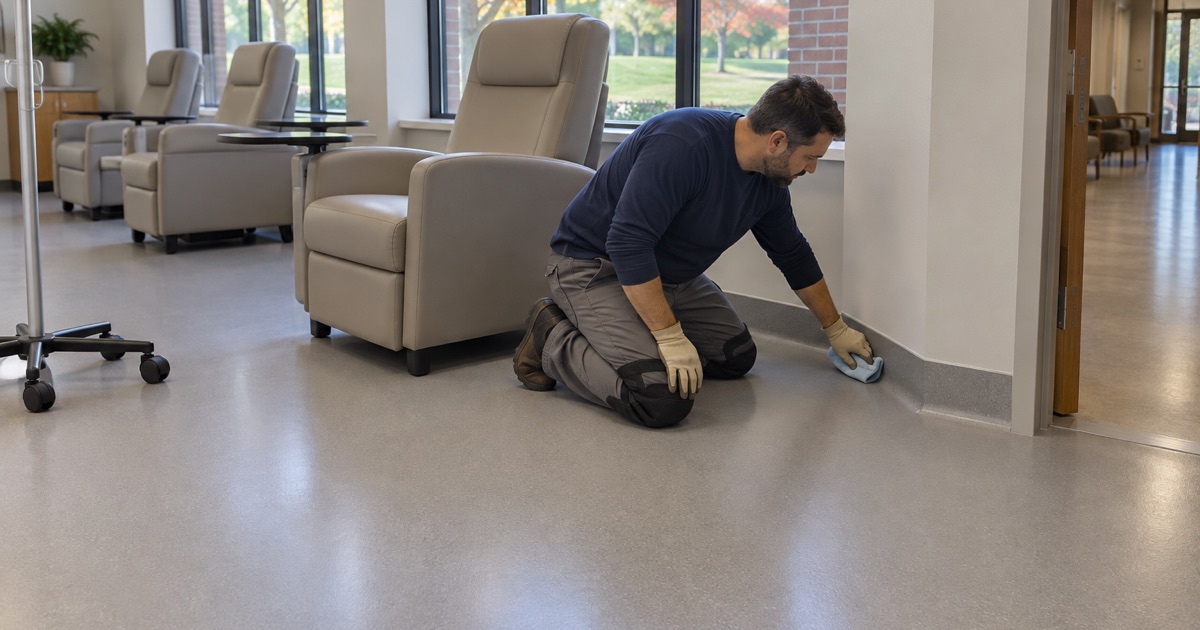
Residue lands where people work, around chairs and in restrooms, and a finish that traps it makes every wipe less effective. Grout lines, open seams, worn spots and porous concrete all hold material a cloth passes straight over. A sound, continuous resin surface gives the cleaning crew one plane to work across, which makes the case for a seamless floor in these rooms a cleaning argument rather than a looks argument.
Looking for epoxy-flooring closer to Justice? See Epoxy-Flooring in Justice.
Deactivate, Neutralize, Decontaminate, Clean: What a Topcoat Has to Survive
Hazardous-drug cleaning, as vendors and a U.S. Army public health guide summarize the USP guidance on the subject, runs as separate steps: deactivation, decontamination, cleaning and disinfection. Sodium hypochlorite or another EPA-registered oxidizer is the usual deactivating agent unless a drug’s labeling says otherwise, and the contact time has to be long enough for it to work.
No single agent deactivates every hazardous drug, so the sequence is layered and repeated rather than simplified. For a floor, that means the coating meets an oxidizer, then a neutralizer, then a detergent and a disinfectant, every working day for as long as the room is in use.
Sodium hypochlorite and color change
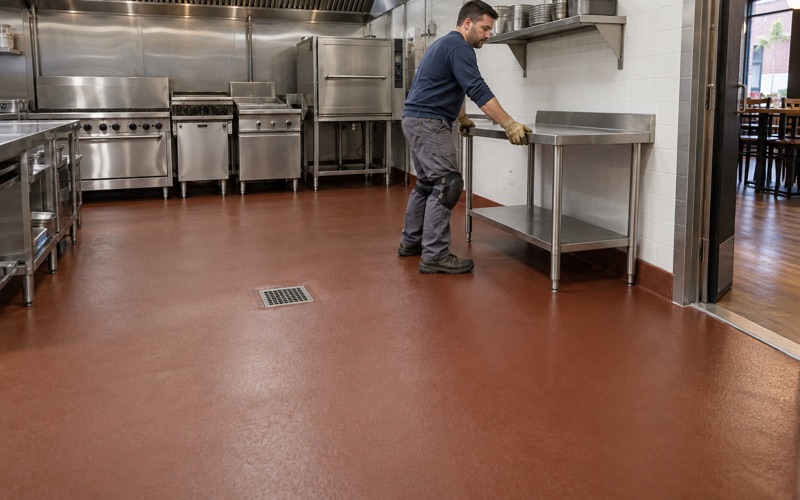
Bleach is the hard part of that routine. One epoxy manufacturer’s chemical-resistance chart we keep on file rates 15% hypochlorite as leaving the coating’s mechanical properties intact while changing its color and gloss. In practice the floor holds together, but a deep color or a high-gloss finish will not look the way it did on the day it was installed.
We say that before a color is chosen rather than after it fades. In a clinical room, a lighter, more forgiving color under a topcoat selected against the actual cleaning products usually serves better than a showroom finish. The facility’s own product list is the document we need in hand to make that choice well.
The neutralizer step
When hypochlorite is used, the summarized guidance calls for a neutralizer such as sodium thiosulfate to follow it, specifically to reduce surface damage. A topcoat in these rooms is therefore chosen against a pair of chemicals rather than one, and against the repeated wet cycles of both, which rules out any product whose data sheet is silent on either.
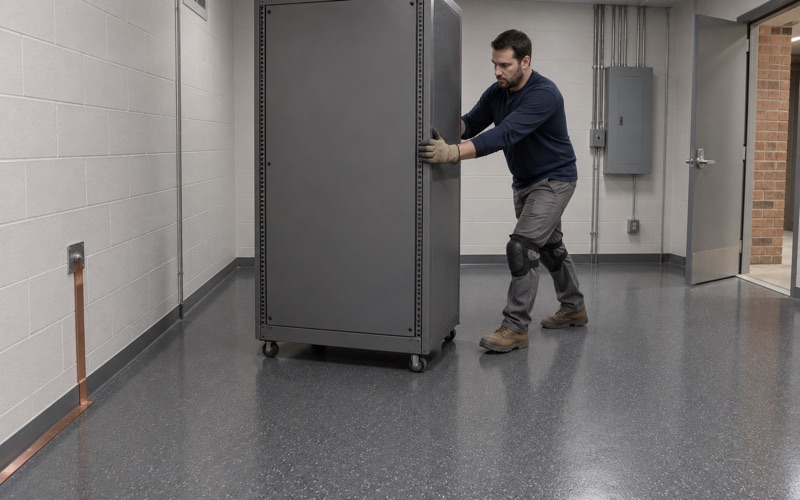
A 100% solids epoxy body coat under a chemical-resistant urethane or polyaspartic topcoat is a common build for wet-cleaned commercial rooms. The specific product still comes from the manufacturer’s resistance data measured against the facility’s own chemicals. Our proposal names that product, the build and the finished thickness, so an infection-control or facilities team can check it against their protocol before anything is installed.
Seams, Grout and Porous Concrete: Why Seamless Wipes Clean
Tile floors usually fail this routine at the joints rather than the tile face. A grout line is a groove of porous cementitious material, and sheet goods carry seams that can open with age. Both leave places where residue and cleaning solution settle out of reach of a cloth, and both get worse as the floor gets older.
Bare or sealed-only concrete is worse still, because the slab itself is porous and takes up whatever is mopped across it. A continuous resin floor removes those reservoirs, provided it goes down over a slab that has been profiled and moisture tested properly. Coating over damp concrete invites blistering, and a blister is just a new seam in a different shape.
Integral cove at the wall
The wall base is where a floor most often stops being seamless. An integral cove carries the resin up the wall in a curved radius, so the corner where floor meets wall has no gap for a wipe to miss and no rubber base to peel away. The same detail is carried around casework and plumbing penetrations wherever the layout allows it.
Joints, cracks and wet traction
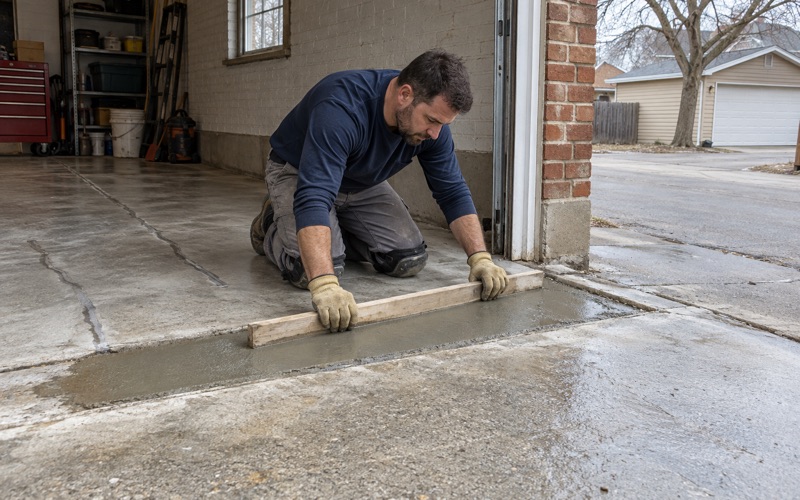
A slab’s control joints still move, so they are filled with a flexible joint material and coated over rather than bridged with rigid resin that will crack along the line. We read the existing cracks and any old coating before quoting. When a crack is active, or a slab needs repair or replacement first, we say so plainly instead of coating over the problem.
Slip resistance matters too, since these floors are wet often and people walk them while they are. A fine aggregate in the topcoat gives traction without building a texture so coarse that it holds residue. That balance is worth agreeing on with a sample before the room is finished, because a profile that is easy to walk can still be hard to wipe.
Decontaminate Before You Grind, at the Clinic and in the Garage
Surface preparation is where a hazardous-drug room differs most from any other job. Grinding or shot blasting an existing floor that may carry drug residue would put that residue into the air. So preparation waits until the facility has decontaminated the room under its own procedures, and not a day earlier.
We do not decontaminate rooms, test for chemotherapy drugs or perform wipe sampling; that work belongs to the facility and its specialists. What we ask for is written confirmation that the room has been released for construction before a grinder comes through the door. Without that release, the job does not start.
Working around clinic hours
An infusion clinic open from 7:30 a.m. to 5:30 p.m. on weekdays leaves evenings and weekends as the working window. We schedule clinic, school and storefront floors around the hours a building has to keep running, collect grinding dust at the machine, and sequence sections so a cured, cleanable floor is handed back before patients return.
Curing is scheduled against slab temperature and the dew point spread at the surface rather than the calendar. A topcoat that has not reached full cure is not ready for an oxidizer. The first deactivation wipe is therefore timed to the product’s data, not to the next morning’s appointment book, and we put that date in writing.
The same logic in a Hinsdale garage
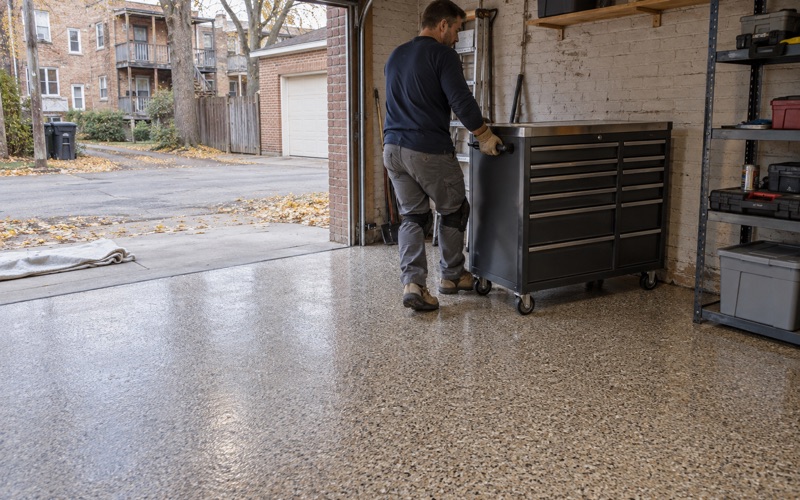
Hinsdale’s occupied homes are 89.9 percent owner-occupied, and many of those garages hold pool chemicals, fertilizer, motor oil and solvents. A spill soaked into bare concrete is a contamination question too, on a much smaller scale. It changes how a garage slab is prepared, and it is the first thing we ask about on a walkthrough.
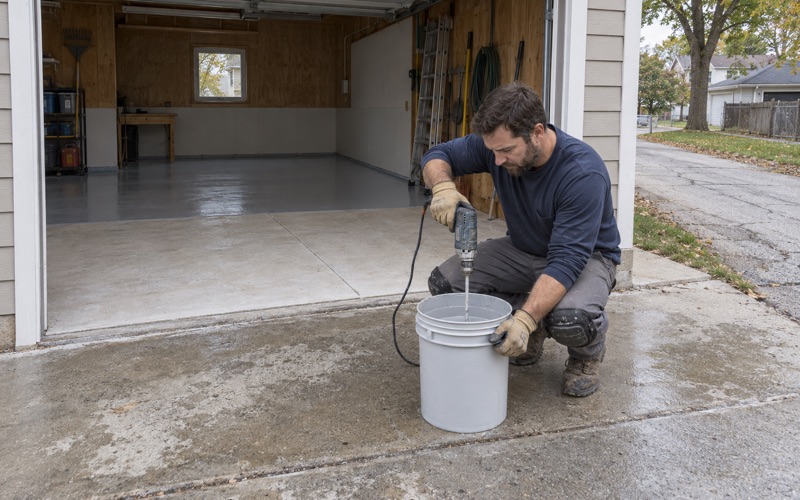
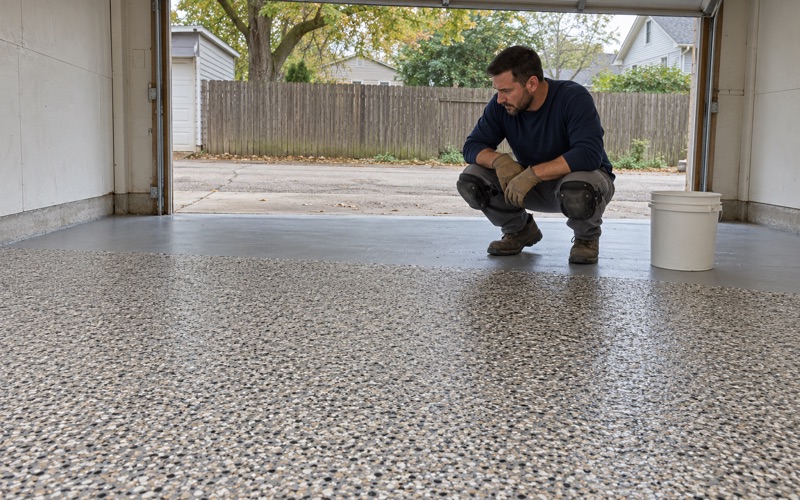
Before we grind, we ask what has been stored and spilled, clean oil and chemical stains so they do not travel with the dust, and treat a stain that will not lift as a bond risk to test rather than coat over. The finished floor is then built for the calcium chloride brine and rock salt that winter tires track in.
Every home job also gets a written contract and the Home Repair: Know Your Consumer Rights pamphlet before work starts, as the Illinois Home Repair and Remodeling Act requires. Warranty exclusions are read out before the job is sold, and moisture is the first one we name, because it is the one most likely to matter on a slab that has never been tested.
- 20+ Years Coating Concrete
- Moisture Tested Before Quoting
- Written Contract on Every Home Job