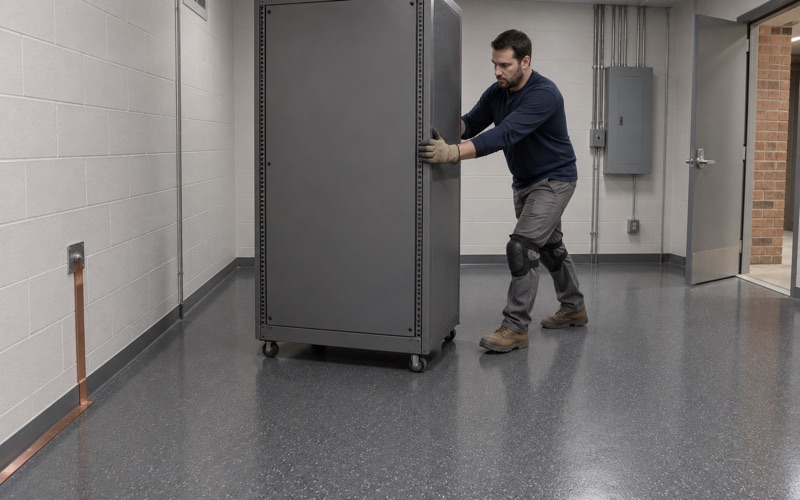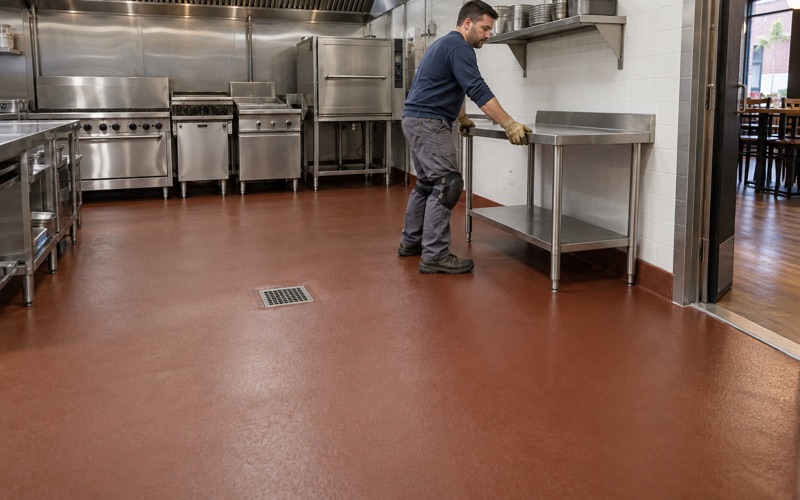
Oak Park Epoxy Flooring has spent more than 20 years installing epoxy flooring in Prospect Heights and nearby, and the floors we think hardest about here are the ones that hold lawn chemicals. A garage shelf of fertilizer bags, a storage room where a spreader gets filled, a corner where a sprayer is rinsed out: each one puts dissolving salts onto concrete that was never sealed against them.
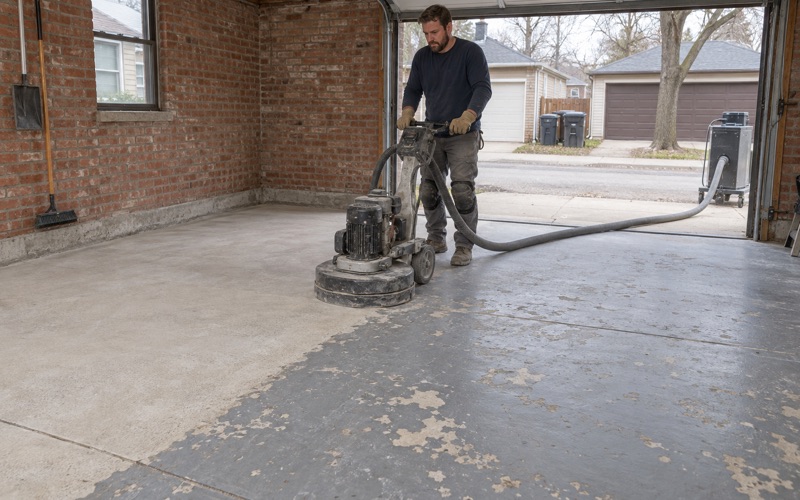
Our approach is the same whether the floor belongs to a homeowner or to a business that stores turf products. We open the slab mechanically with a diamond grinder or a shot blaster, never with acid, so the coating bonds to sound concrete instead of a weakened skin. Then we build a seamless, chemical-resistant system that a broom and a hose can keep clean.
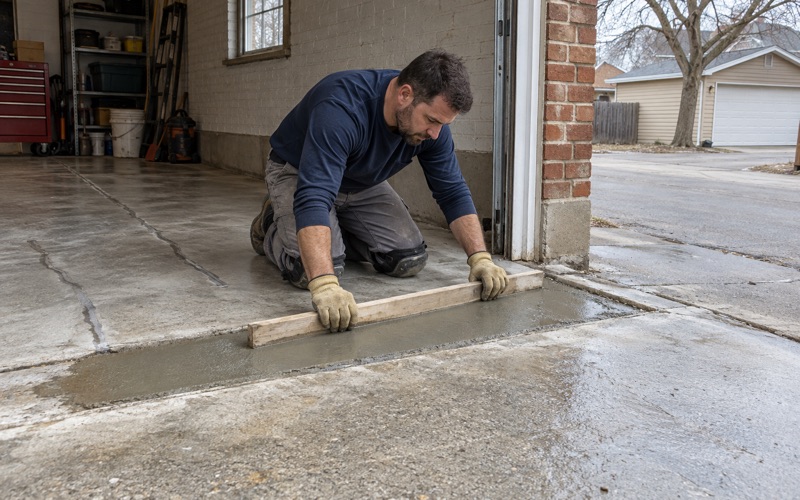
Before any of that, we look closely at the slab. Cracks, old coatings and soft or powdery patches where granules have sat for years tell us whether the floor can be coated as it stands. When it needs repair or replacement first, we say so in the quote rather than after the job has started.
A City Crew That Fertilizes From April to Mid-November
Prospect Heights Public Works does more than spray weeds. Its posted pesticide notice for the 2026 season lists three glyphosate herbicides, Rodeo, Roundup QuickPro and Aquamaster, alongside LockUp Extra2, a herbicide-plus-fertilizer product, and EcGrow Starter Fertilizer. The application window runs from April 1 through November 15, between 7:30 a.m. and 3:00 p.m., on the parkways, fields, turf and embankments that city staff maintain.
The notice exists because of Public Act 103-0976, the state law on pesticide use along rights-of-way, which calls for written notice 24 hours ahead. It is a useful public document for a reason that has nothing to do with weeds. It shows that turf fertilizer is part of the working year in this city for about seven and a half months, and that the products have to be kept somewhere between runs.
Where the fertilizer and herbicide are kept
The city’s crews work out of the Public Works facility at 401 Piper Lane, inside Prospect Heights in Wheeling Township, Cook County. From there the department also looks after City Hall, the police station, the water facility and the Metra station parking. The notice does not say where the turf products are stored or mixed, and we have not seen any floor at that address.
We mention it because it is the clearest local example of a pattern that repeats on a smaller scale in private garages and commercial storage rooms. Wherever granular fertilizer sits on a shelf for months, a sprayer gets filled and rinsed, and a spreader is parked after a run, the floor beneath it takes the spills. That floor is what this page is about.
Turf products, not mosquito spray
Mosquito control in the area belongs to the Northwest Mosquito Abatement District rather than the city, so the products on the city’s list are lawn and weed products. For a concrete floor, the fertilizers are the ones that matter most. Spilled herbicide mainly leaves residue and staining, while fertilizer salts can work on the concrete itself once loose granules pick up moisture and dissolve.
Looking for epoxy-flooring closer to Crestwood? See Epoxy-Flooring Services in Crestwood.
Why Fertilizer Salts Eat Bare Concrete
Many lawn fertilizers carry their nitrogen as ammonium salts, with ammonium sulfate and ammonium nitrate among the common forms. University research describes ammonium sulfate as extremely harmful to concrete, through combined acid and sulfate action that can break down hydrated cement paste. A RILEM state-of-the-art summary links ammonium nitrate fertilizer to severe degradation in fertilizer factories and storage silos.
The mechanism is chemistry rather than wear. Ammonium reacts with the lime in cement paste, and nitrate forms highly soluble salts with free lime that wash away, leaving the surface more porous and weaker. One paper on concrete fertilizer storage buildings reports strength loss and higher porosity as common durability problems. We have not read the labels of the specific products on the city’s notice, so we speak of ammonium-based fertilizers in general.
What it looks like on a garage or storage floor
On a small scale, the damage shows up where granules sit. A torn bag leaks onto the slab, a few pellets roll under a shelf, and humidity or a wet boot dissolves them so the solution soaks in. Over several seasons the surface turns sandy, the paste around the stones wears away, and a ring of etched concrete outlines where the bags stood.
Bare concrete gives that solution every chance it needs. It is porous, it holds moisture, and its joints and cracks collect granules that stay damp long after the rest of the floor dries. Sweeping helps, but a broom cannot reach into pores, and hosing an unsealed slab can spread dissolved salt over a wider area rather than removing it.
Why a densifier alone falls short
Some owners ask whether a lithium silicate densifier will do the job. It hardens the surface and cuts dusting, and it is a sound treatment for some warehouse floors. It does not put a continuous film between the slab and a dissolving salt, though, so for a chemical shelf or a fill area we recommend a coating with a sealed surface and filled joints.
A Sealed, Sweep-and-Rinse Floor Where Chemicals Are Kept and Mixed
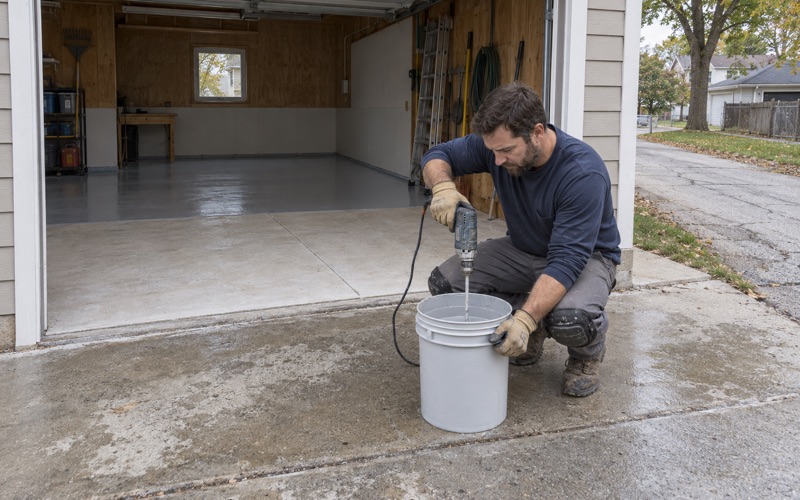
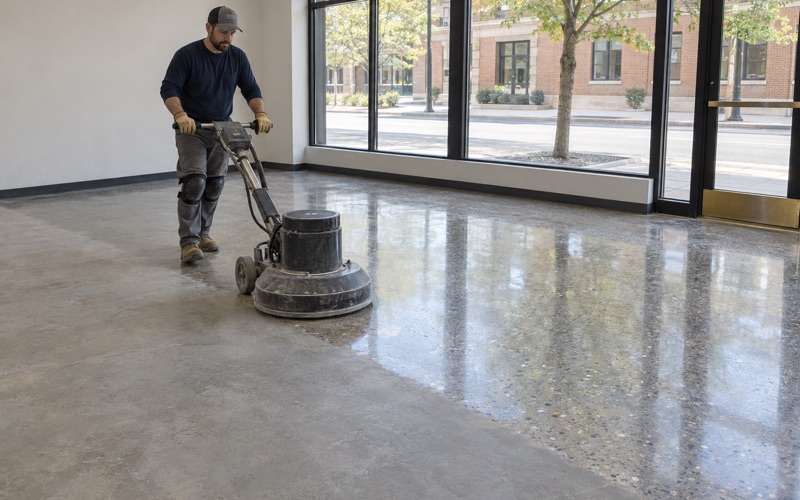
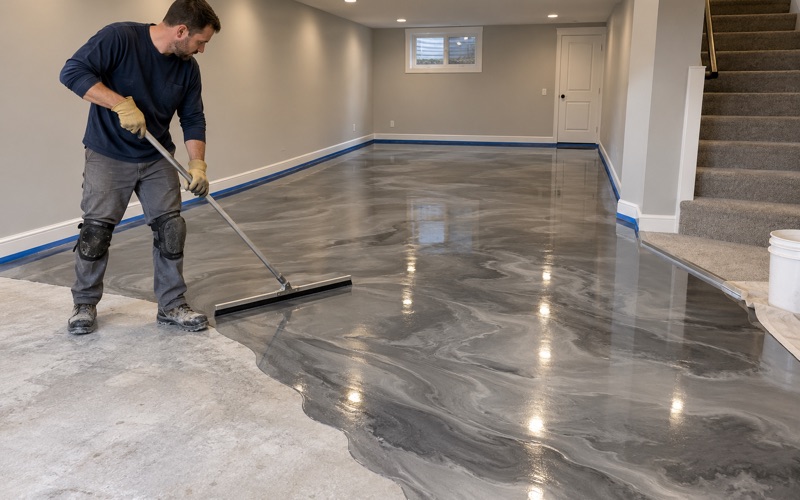
The floor we build for a fertilizer storage area starts with preparation. We grind or shot blast to the ICRI concrete surface profile the system calls for, remove any weak or salt-contaminated surface we find, and patch damaged areas. A coating laid over paste that fertilizer has already softened will fail along with it, so we would rather remove more concrete than trap the problem.
Moisture comes next, and it is its own line item in the scope. We run ASTM F1869 calcium chloride tests or ASTM F2170 in-situ relative humidity probes, depending on the slab, and a moisture-mitigation primer goes down when the readings call for one. Moisture is also the first exclusion we read aloud from the warranty, before anything is signed.
The system build
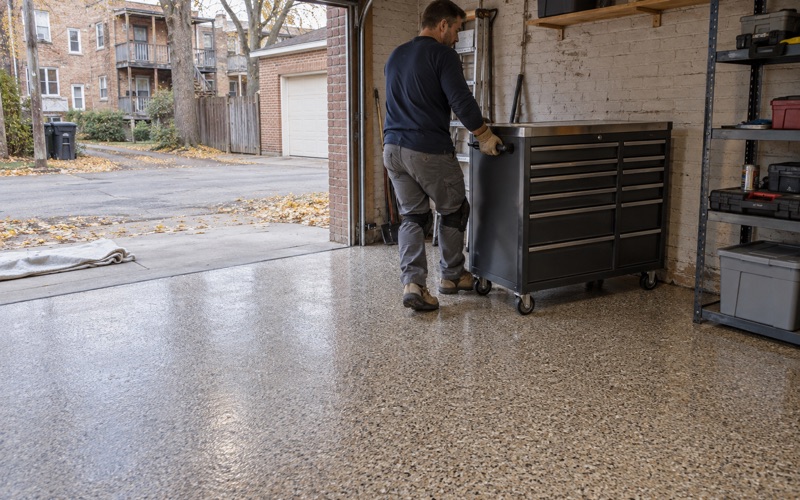
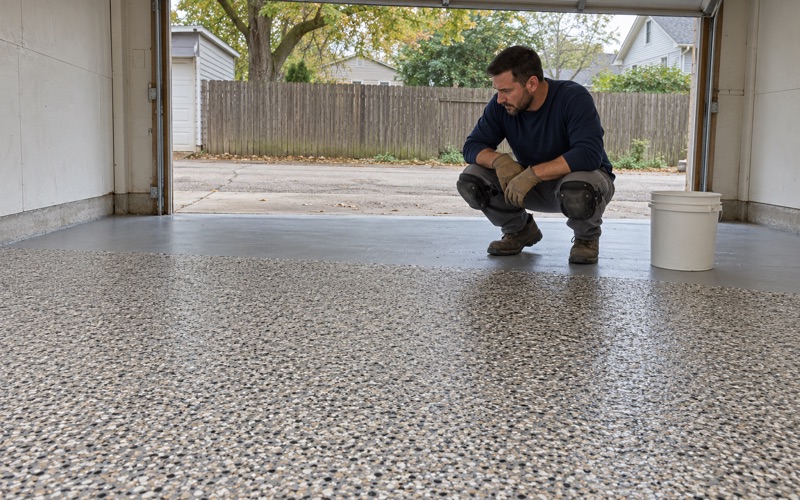
For most storage rooms and garage chemical corners, a 100% solids epoxy base with a broadcast and a polyaspartic or polyurea topcoat gives a dense, seamless surface. Quartz aggregate broadcast adds grip where the floor gets wet, and vinyl flake suits a garage. Where a commercial space sees heavier chemical exposure and hot washdown, urethane cement is worth discussing.
Every proposal names the product, the layers and the finished thickness, so the floor that goes down can be checked against the one that was quoted. Coatings are chosen within the Illinois VOC limits under 35 Ill. Adm. Code Part 223, which bind the installer as well as the manufacturer. In a closed storage room with little ventilation, that choice matters on the day of the work.
Joints, edges and the fill station
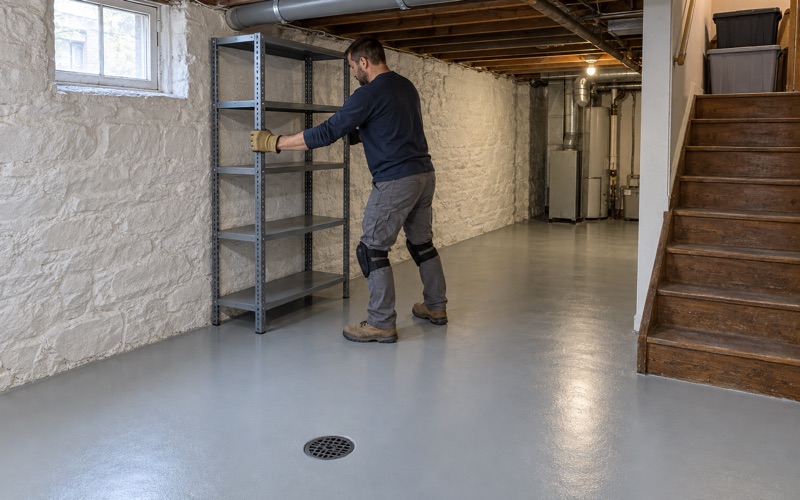
Granules collect in joints, so joints get real attention. Static control joints are cleaned out and filled flush before the coating goes down, while moving joints are saw cut through the finished floor and filled over closed-cell backer rod with a flexible sealant. A cove or short base along the wall keeps rinse water from running under shelving into the gap where slab meets wall.
Where a sprayer is filled and rinsed, we talk through slope and where the water ends up before anything is coated. A coated floor lets a spill be swept up dry first and then rinsed, rather than soaking straight in. We do not describe this as a containment system or a regulated pesticide floor; it is a sealed, cleanable surface built to be maintained.
The Lawn-Care Corner of a Prospect Heights Garage
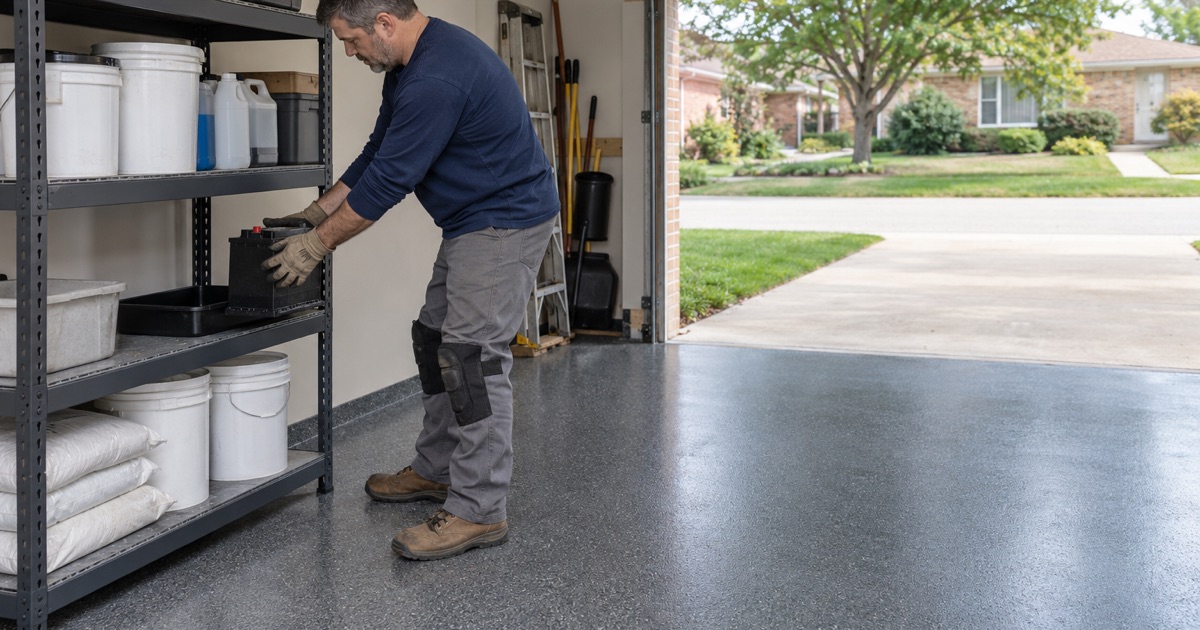
Plenty of homes here hold the same chemicals in miniature. The city counts 2,320 owner-occupied detached single-family houses, and many of those garages keep a spreader, a few bags of lawn food and a jug of weed killer on a shelf. A starter fertilizer in spring and another feeding later in the season can leave a slow trickle of granules on the slab.
The fix is simple once the floor is right. We keep the coating continuous under the shelf where the bags stand, and we often suggest a lighter or textured zone there so spills are easy to spot. A dustpan and a damp mop then deal with whatever a torn bag drops, and nothing sits in a pore all summer.
Curing and the season
Curing is planned against slab temperature and the dew point spread at the surface, not the date on the calendar. An attached garage can often be coated during the same months the city is fertilizing its parkways. An unheated detached garage may have to wait for warmer weather, and we will tell you so plainly rather than risk amine blush or a soft cure.
For a home job, the Illinois Home Repair and Remodeling Act calls for a written contract and the Home Repair: Know Your Consumer Rights pamphlet before work begins, and we provide both. Illinois issues no state license for coating work, so we check what the city expects of contractors before a date goes on the schedule.
Habits that help the coating last
A coating buys time, but habits help it last longer. Store bags on a pallet or shelf rather than directly on the floor, keep them closed, and sweep loose granules before washing the area. Rinse a sprayer where the water can be wiped up, and do not let standing rinse water dry into a crust on the surface.
If an existing floor already shows sandy, etched patches under the bags, we test how deep the softening runs before we quote. Shallow damage usually comes out with normal grinding, while deeper loss may need a patch or an overlay first. The proposal will say which one the slab needs and why.
- 20+ Years Coating Concrete
- Moisture Tested Before Quoting
- Written Contract on Every Home Job