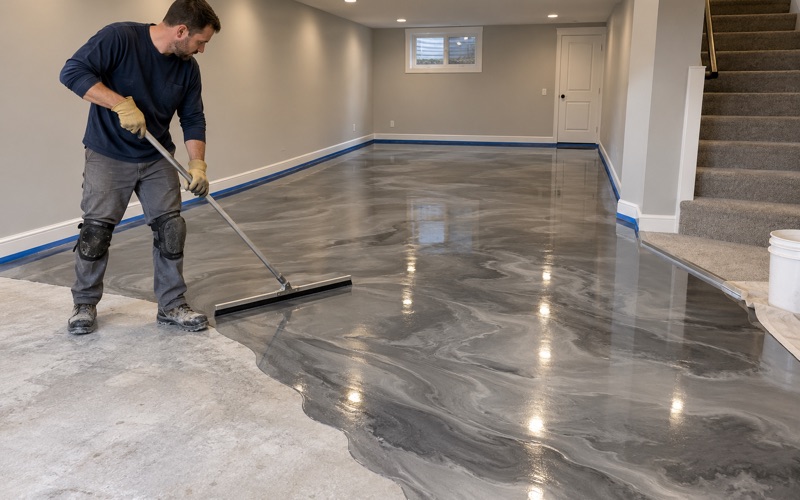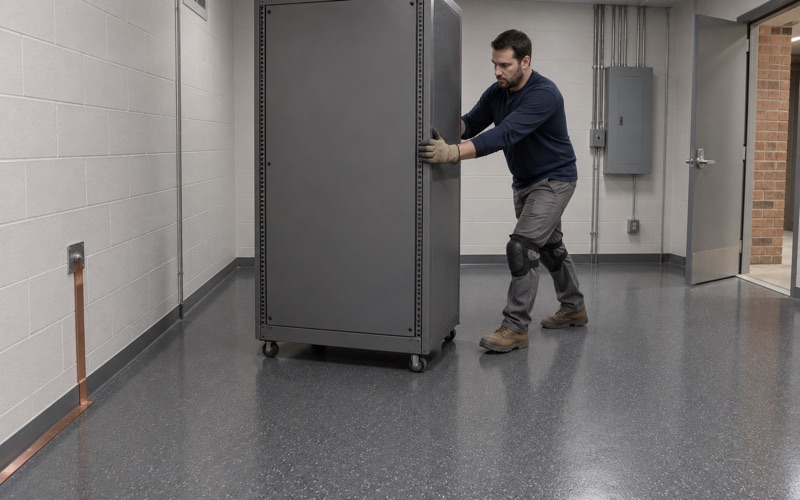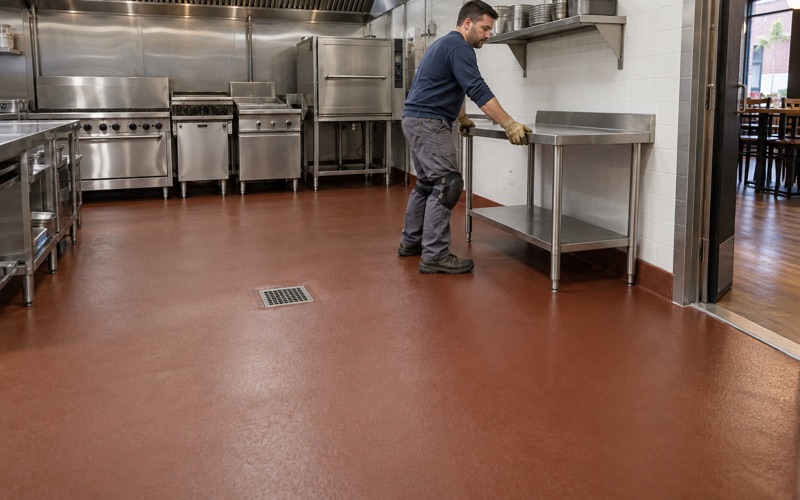
Oak Park Epoxy Flooring has put more than 20 years into epoxy flooring in River Forest and the rest of the near west suburbs, and the first question we ask about any floor is what moves across it. A garage slab has to hold a wet tire. A workshop, a lab or a clinic room has to do something harder to judge from a sample board: let a loaded wheel roll, turn and stop without fighting the person pushing it, and without wearing a track into the finish.
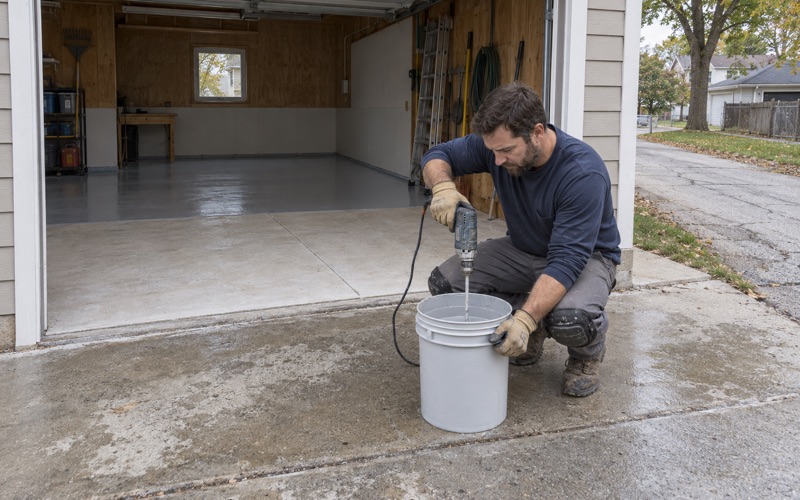
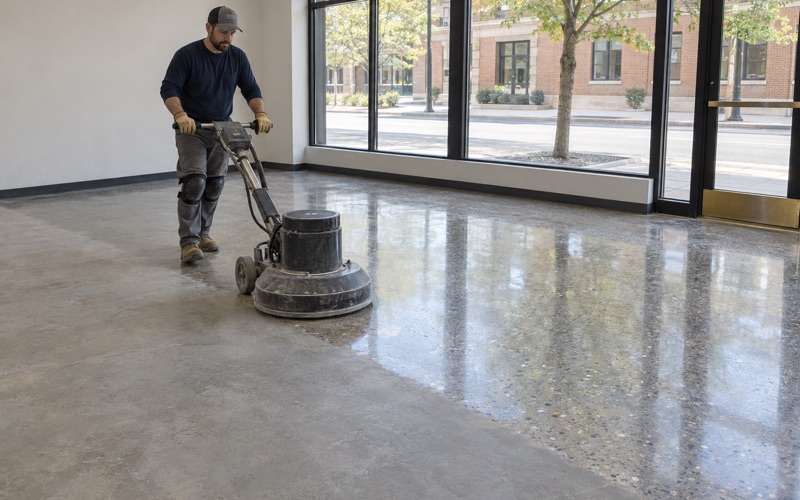
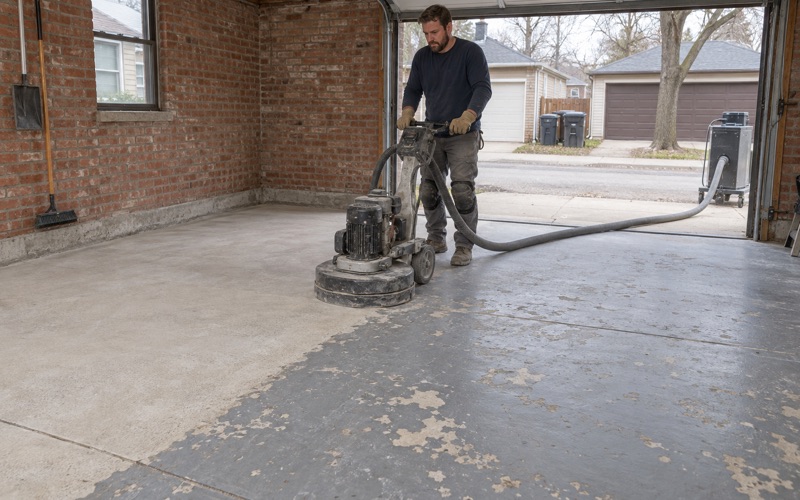
That question changes the system we write up. Texture, topcoat and wheel get chosen together, because each one decides how the other two behave. Underneath all of it, the slab is opened mechanically with a diamond grinder or a shot blaster, never acid etched, so the resin bonds to sound concrete instead of a weak surface skin.
Our proposals name the product, the system build and the finished thickness. On a floor that will carry carts, beds or rolling tool chests, the written scope also names the texture in each zone and the topcoat over the epoxy, so the choice that makes a floor easy to roll is on paper rather than left to whoever is holding the broadcast bucket.
A Hospital Floor on the Third Floor of Concordia’s Christopher Center
Concordia University Chicago, whose campus sits on Augusta Street, renovated the whole third floor of its Christopher Center into a 4,500-square-foot Nursing Simulation Center, built for the four-year BSN program that began in fall 2023. The architect’s project description lists four learning spaces: a skills attainment laboratory, multi-specialty intensive care spaces, a health assessment learning center and a simulation home environment. Coverage of the renovation describes lifelike patient simulators and hospital-grade equipment.
We had no part in that project and have not seen its floor. Nothing published about the lab names the finish underfoot. We raise it because it is the clearest example in River Forest of a room that asks something a garage never does, and the reasoning carries to any lab, clinic or classroom conversion we are asked to price.
A floor that is rolled across all day
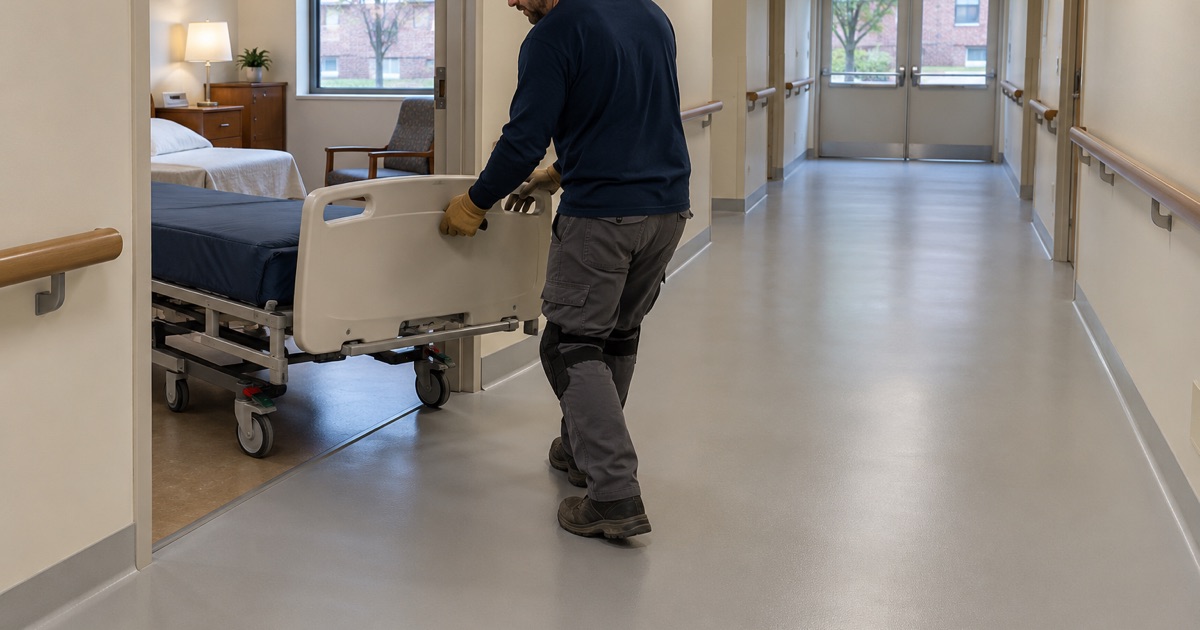
A simulation lab is a hospital in miniature. Beds, carts, monitors and simulators sit on castors, and in a teaching space they are rolled in, turned, braked and rolled out again in the same small rooms every class day. The floor is judged as much by how it rolls as by how it grips, and a finish that feels right underfoot can still make a loaded bed hard to steer.
Turning and braking, not just straight runs
The hard work on a floor like that happens where a wheel pivots. A castor swiveling in place under a heavy bed grinds against the topcoat in a tight circle, and a braked wheel dragged a few inches does the same thing in a line. Those spots, beside a bed bay or at a doorway, are where a finish shows wear first, so they are where we look hardest at the topcoat.
What an upper-floor conversion changes
A classroom or lab built out on an upper floor is usually coated over an existing slab that has carried other finishes before. We check it for old adhesive, paint and patching, grind until the profile is clean and even, and still run moisture tests rather than assume an upper slab is dry. Those tests are a priced line in the scope on every job.
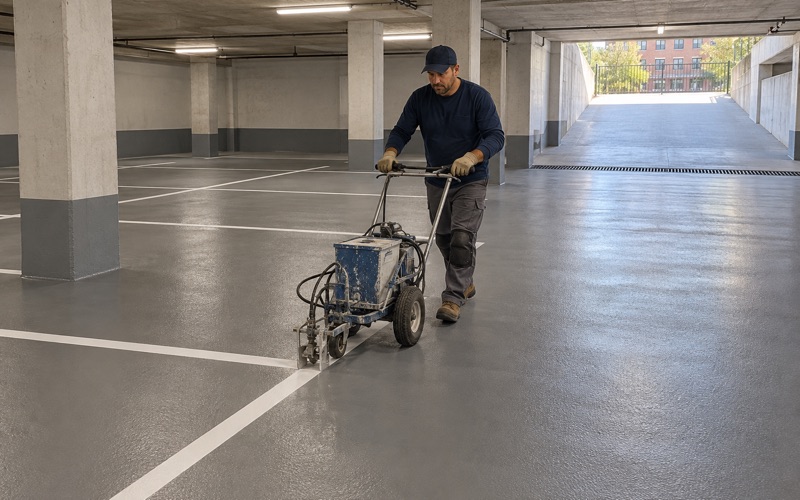
Schedule matters as well. A school or clinic floor is planned around the hours the building has to keep running, which often means overnight or weekend windows and a topcoat chosen partly for how quickly the room can return to service.
Looking for epoxy-flooring closer to Forest Park? See Epoxy-Flooring Services in Forest Park.
Texture Against Rolling: Why a Coarse Broadcast Is the Wrong Answer
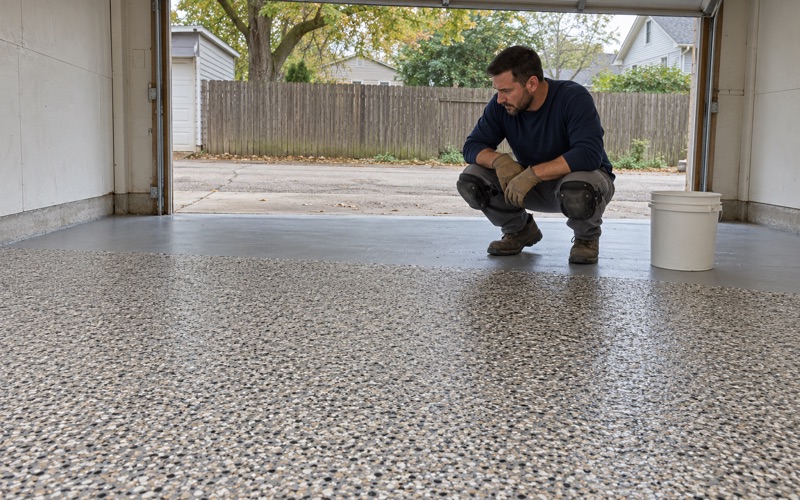
Most epoxy floors sold to homeowners get a broadcast: vinyl flake for color, or quartz aggregate for grip, scattered into wet resin and locked down under a topcoat. On a garage slab that texture earns its keep against a wet tire and a winter of calcium chloride brine. In a room built around wheels, a heavy broadcast becomes a cost paid every time something is pushed.
What the castor guidance says
The Resilient Floor Covering Institute published guidance in 2024 on castors and floors. It was written for resilient flooring, not resin, so we apply it by inference rather than as an epoxy standard. Its point about texture is direct: harder castors can be noisier rolling across a floor, especially a floor with a heavy texture or a rougher surface. A coarse floor also takes more effort to push across, which matters with a loaded bed or a cart full of equipment.
Zoning texture by what happens there
The answer is not a slick floor. In a room with sinks or wash-down stations, slip resistance still matters where water lands. So we split the floor into zones: a fine texture in the rolling lanes, with any coarser broadcast held to the spots where wet work actually happens. The proposal draws those zones and names the aggregate and the topcoat for each, so the finished floor can be checked against the plan.
Sampling before committing
For any floor where rolling matters, we lay a sample panel with the intended texture and topcoat and roll the real equipment across it. A chair, a cart or a tool chest tells you more in a minute than a spec sheet does. If it drags or rattles, we change the texture before the floor is poured rather than after.
Noise in rooms where people listen
Noise is easy to overlook until the room is in use. In a teaching space, a clinic or a home office, a cart rattling across a coarse floor competes with whoever is speaking. A finer texture under the rolling lanes keeps that sound down, and it gives up nothing in grip where the floor stays dry.
Grit, Gloss and Point Loads: Choosing the Topcoat for Castor Traffic
The body of a durable system is usually 100% solids epoxy, built to a stated thickness. The surface a wheel touches, though, is the topcoat, and on a castor floor that is the layer we spend the most time choosing.
Soft wheels and embedded grit
The same castor guidance warns that wheels too soft for their load can pick up dirt or grit that embeds in the wheel and scratches the floor surface. A soft wheel turns into a slow, steady abrasive, dragging the same grit around the same room. On a gloss epoxy that shows quickly as a dull, hazy track along the routes the equipment takes.
Why a urethane topcoat goes over the epoxy
Epoxy is a strong, well-bonded base, but its surface scratches and dulls more readily than the coatings designed to sit on top of it. For rolling traffic we specify a scratch-resistant urethane topcoat over the epoxy, or a polyaspartic where the schedule calls for a faster return to service. Either one is the sacrificial wear layer, and it can be recoated later without disturbing the system beneath it.
Sheen belongs to the same decision. A high-gloss topcoat shows every fine scratch from a gritty wheel, while a satin or matte finish hides light wear for longer and reads calmer under bright overhead lighting. Whatever sheen is chosen, routine dust mopping that keeps grit off the floor does more for the topcoat than any product we can sell, because grit is what the wheels carry around.
Point loads and the castor check
Small-contact castors, or wheels with a high crown, concentrate a heavy load onto a very small patch of floor, and the guidance notes they can leave indentation marks. A flatter, wider wheel spreads that load out. Before we finalize a system for equipment-heavy rooms, we ask the owner to confirm wheel type and load with the equipment supplier, because sometimes the right fix is a different castor, not a thicker floor.
Furniture brings the same problem home. A narrow metal glide under a loaded shelf or a heavy cabinet can dent a finish over time, and a wider glide or pad costs far less than a repair.
Rolling Chairs, Carts and Toolboxes on River Forest Home Floors
Most of the floors we coat in River Forest are not labs, but plenty of them see wheels every day. A desk chair in a basement office, a rolling tool chest and a mechanic’s creeper in the garage, a cart in a home gym: each one benefits from the same thinking, scaled down. A fine texture under the chair and the creeper, a durable topcoat, and grip reserved for where the car parks.
Older basement slabs come first
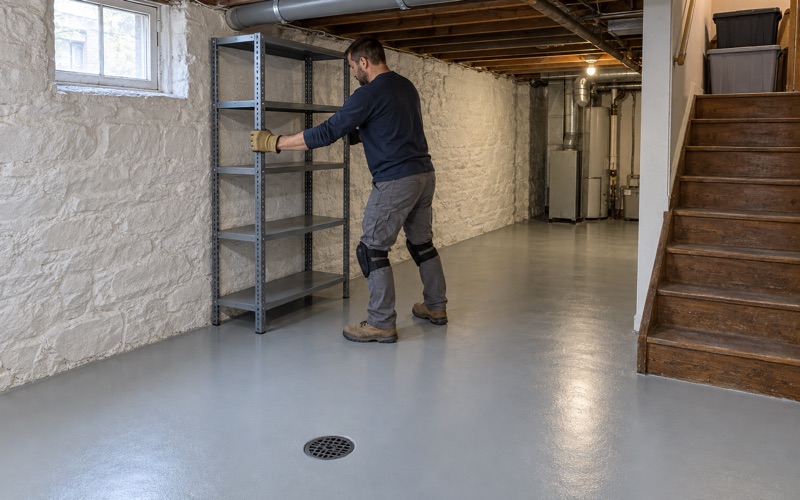
River Forest’s housing is old: 42.2 percent of its homes predate 1940 and 68.8 percent predate 1960. A prewar basement slab has often been painted, patched or glued over more than once. We check for old paint, patches and adhesive before choosing a coating, and we test moisture with ASTM F2170 relative humidity probes or ASTM F1869 calcium chloride tests. Moisture is also the first exclusion we read out from the warranty before a job is sold.
Home gyms and workshops
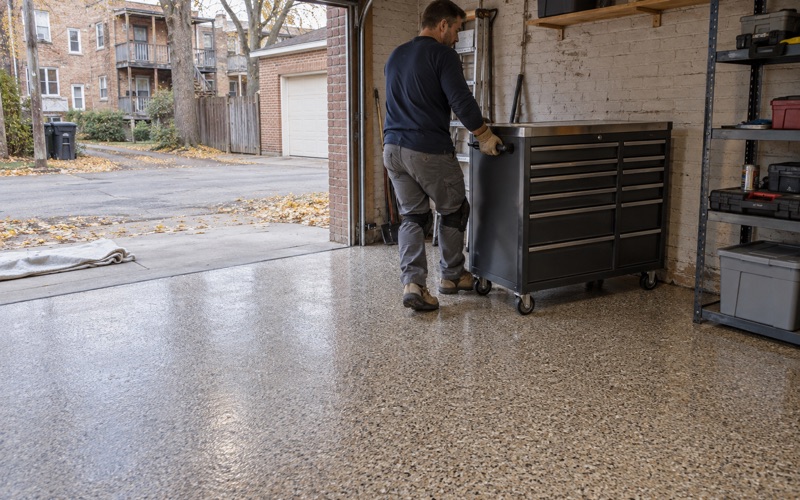
A basement gym mixes rolling with dropping. A bench on castors and a storage rack on wheels want the fine texture, while the area under free weights wants a thicker build and is often better served by rubber mats laid over the coating. A workbench or rolling cabinet in the garage is the same story: we mark where it parks and where it travels, and keep the coarse broadcast out of its path.
Garages and curing
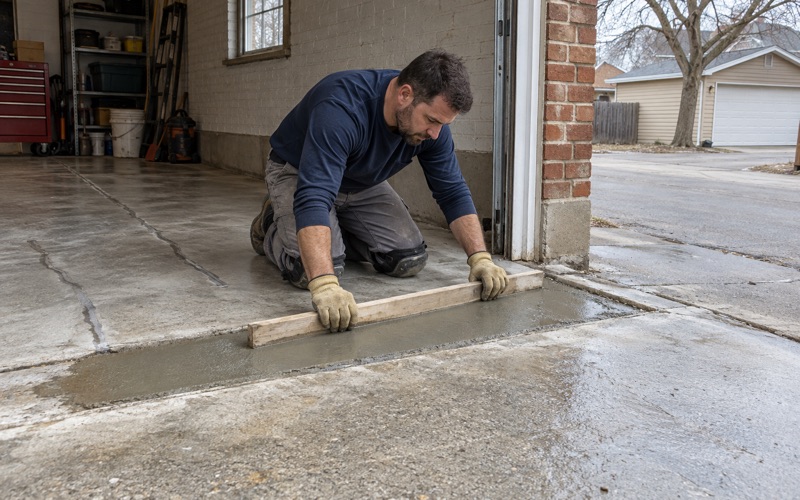
Detached garages that open onto an alley are reached and staged from the alley, with grinding dust collected at the machine and never washed toward a drain. Garage systems are built to take the rock salt and brine that a Cook County winter tracks in. Cure is scheduled against slab temperature and the dew point spread rather than the calendar, and an unheated detached garage sometimes has to wait for spring.
Part of a larger renovation
The village reports about 6-10 renovations a year in its moderate and very high-end housing, so a floor here is often one trade among several. We confirm the village’s own contractor rules before scheduling, since Illinois issues no state license for coatings work, and every home job gets a written contract and the Home Repair: Know Your Consumer Rights pamphlet before work starts.
- 20+ Years Coating Concrete
- Moisture Tested Before Quoting
- Written Contract on Every Home Job