Oak Park Epoxy Flooring has spent more than 20 years on epoxy-flooring in Schiller Park and the nearby Cook County suburbs, and the floors we think hardest about here are the ones that must be swept clean every shift. A coating on a dock, a scale house or a handling bay earns its keep by how completely dust and spilled product come off it. Color and gloss come second.
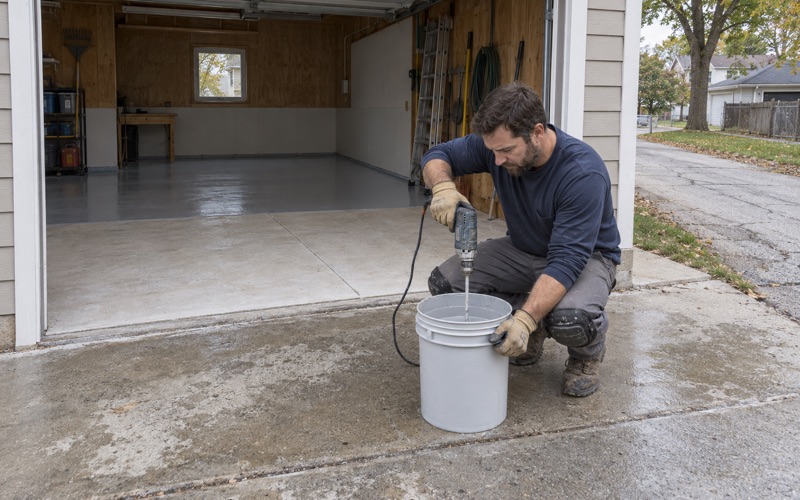
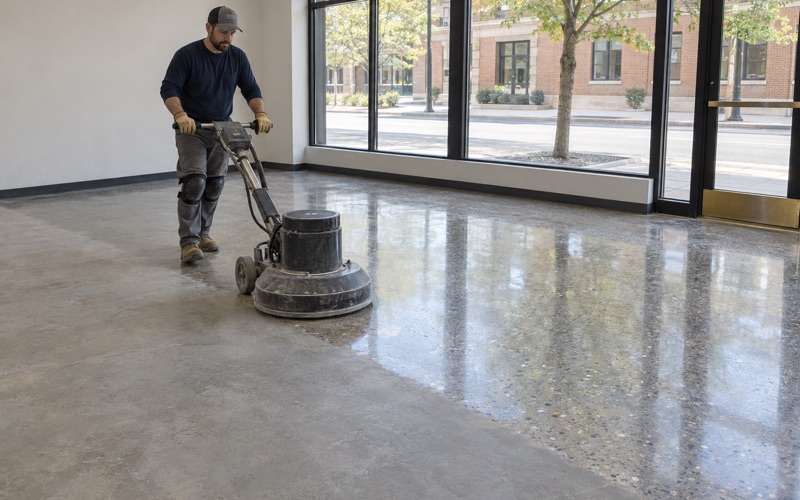
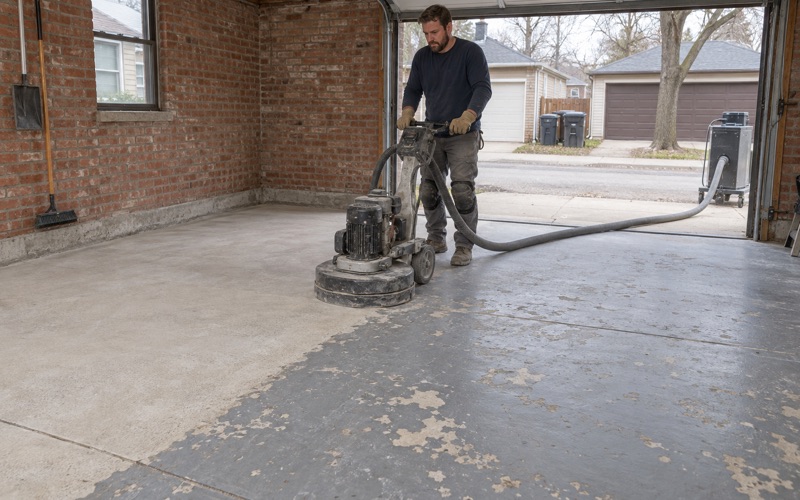
Every slab we coat is opened with a diamond grinder first, and we never acid etch, because a coating bonds to sound concrete or it eventually lets go. Our proposal names the product, the system build and the finished thickness, so a facility manager can check what was quoted against what went down. If cracks or an old coating mean the slab needs repair before anything goes on it, we say so before we quote.
What follows is how we approach floors where bulk grain and meal are received, weighed and moved. It is not a promise about any particular building, and a coating never replaces the housekeeping program a grain handler is required to run. It changes how much of the dust a crew can actually get off the floor.
A Grain Export Transload at the Schiller Park Yard
Schiller Park is a village in Leyden Township, Cook County, and the Schiller Park Yard, shared by CN and CPKC, sits within it. CN lists its Schiller Park East intermodal facility at 9665 Lawrence Ave, and the agricultural exporter DeLong lists that same street address in the Exports group on its own location page. The address geocodes inside the village.
A CPKC transload spotlight from February 2026 describes DeLong’s Schiller Park operation as featuring fast rail-to-truck and truck-to-rail handling, certified truck scales, and onsite USDA and FGIS inspection services. Elsewhere, DeLong describes its business as transloading soybeans, corn, wheat, DDGS and soybean meal into export containers. What the company handles at this particular site, and how its buildings are laid out, we have not seen.
The village describes itself as sitting at the crossroads of commerce, with local arterials, the Tri-State Tollway, the Canadian National rail yard and O’Hare International Airport all meeting there. Commercial property makes up 55 percent of the village’s 2023 equalized assessed value, which is why a 2.77-square-mile village carries a real market for industrial and warehouse floors.
What Moves Across a Transload Floor
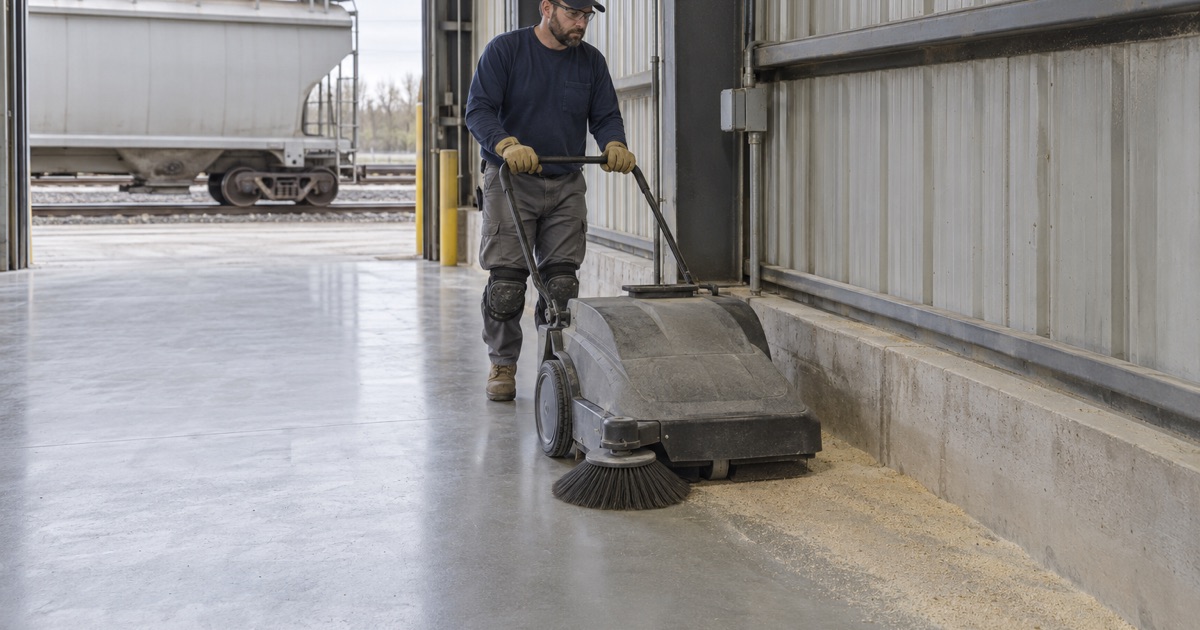
A transload is a place where product changes vehicles: rail car to truck, truck to rail car, bulk to container. Wherever soybeans, corn or meal are dumped, conveyed, weighed and loaded, fine dust lifts off the product and settles on every horizontal surface nearby. Spilled kernels and meal end up on the floor too, and both get swept up as part of the daily routine.
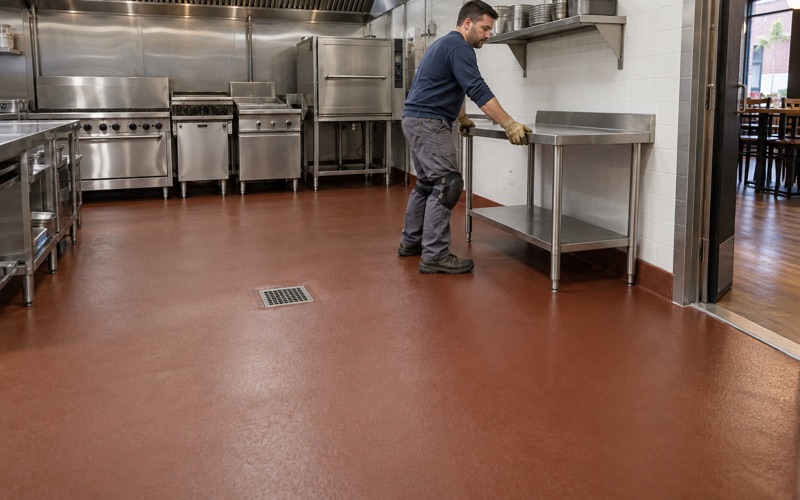
That is the floor we focus on here. It is not a kitchen floor or a clean-room floor, and the question is not hygiene. The question is whether combustible dust that lands on the concrete can be fully removed by the tools a crew already uses, or whether some of it stays behind in the pores and joints after every pass.
Licensing Before Work Starts
Illinois issues no state license for flooring or coatings work, so we confirm the village’s own rules before a job is scheduled. Schiller Park requires contractors to be licensed with the village before construction begins, registering through the Community Core app with scope, cost, insurance, surety bond and workers’ compensation as applicable. That license year runs May 1 to April 30.
Looking for epoxy-flooring closer to Summit? See Epoxy-Flooring in Summit.
What OSHA’s Grain-Handling Rule Says About Floors
OSHA’s grain handling standard, 29 CFR 1910.272, covers the control of grain dust fires and explosions at grain handling facilities. It defines a grain elevator as a facility engaged in the receipt, handling, storage and shipment of bulk raw agricultural commodities such as corn, wheat, oats, barley, sunflower seeds and soybeans. Whether any given Schiller Park site falls under it is a question for its operator, not for us.
Fugitive Grain Dust and the 1/8 Inch Line
The standard defines fugitive grain dust as combustible particles 425 microns or less. Paragraph (j) requires a written housekeeping program to reduce that dust on ledges, floors, equipment and other exposed surfaces, so the floor is named in the rule itself. It is not an afterthought, and a floor that resists cleaning makes the whole program harder to keep.
At grain elevators, priority housekeeping areas include floor areas within 35 feet of inside bucket elevators. There, accumulations exceeding 1/8 inch must be removed immediately, unless equivalent protection is demonstrated. An eighth of an inch is a thin layer, and a floor that holds a residual film after sweeping starts each shift closer to that line than a floor that cleans down to its surface.
If a site has inside bucket elevators, we would ask where that 35-foot ring falls before planning the phases of a coating job. Those are the floor areas the program treats as priority, so they are the last place to leave a cracked joint or a patch of worn, dusting concrete for a later visit.
Compressed Air and Spills
The rule also limits compressed air: it may be used to blow dust down only when machinery that could be an ignition source is shut down. A floor that sweeps and vacuums clean reduces how often a crew is tempted to reach for the air hose at all. That is a practical benefit, not a safety rating.
Grain and product spills are treated differently from dust accumulations under the standard, but the housekeeping program still has to address removing them. Kernels and meal are coarse and visible, which makes them easy to sweep from open floor. On a broken or open-jointed slab, though, they wedge in and can break down into finer material that is harder to clear.
Why a Dusting Slab Never Sweeps Clean, and What Does
Bare concrete that has been trafficked for years often dusts: the weak top layer breaks down under wheels and boots and sheds fine powder of its own. Add grain dust on top and a broom just moves the mix around. The pores and surface texture hold a film that no number of passes fully lifts, and open joints collect what the broom pushes into them.
Cracks, Joints and Old Coatings
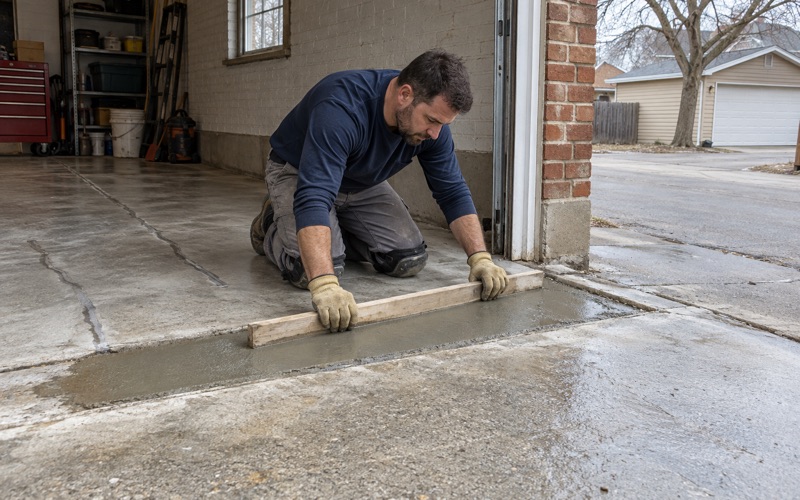
Before we quote a handling floor, we walk it and read the cracks, the joints and any old coating that is lifting or chipped. A slab with active cracks or broken joint edges may need repair before it is worth coating, and on some floors replacement is the honest answer. We put that in writing rather than coating over a problem that will come back through the finish.
Joints are where a sweepable floor usually fails. Unfilled saw cuts and control joints act as dust traps along their whole length, so we fill them flush with the surface wherever the slab’s movement allows. A joint that sits proud or a coating edge that has curled up also catches a broom head and the lip of a vacuum, leaving a line of dust behind.
Sealed, Non-Dusting Surfaces
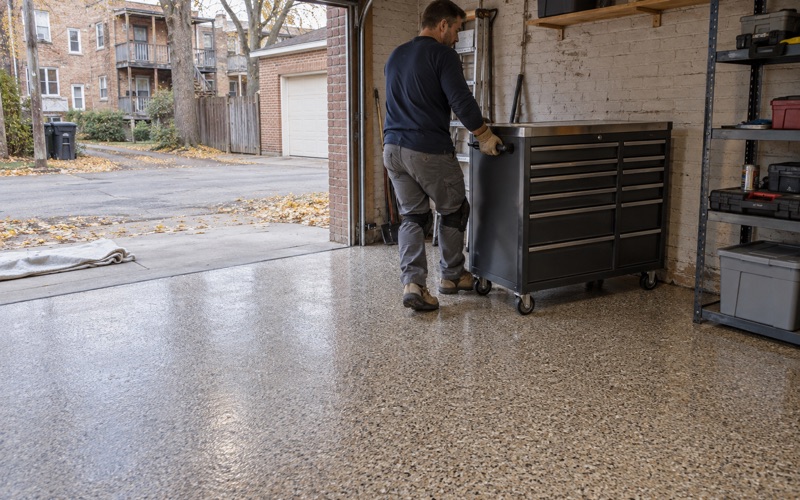
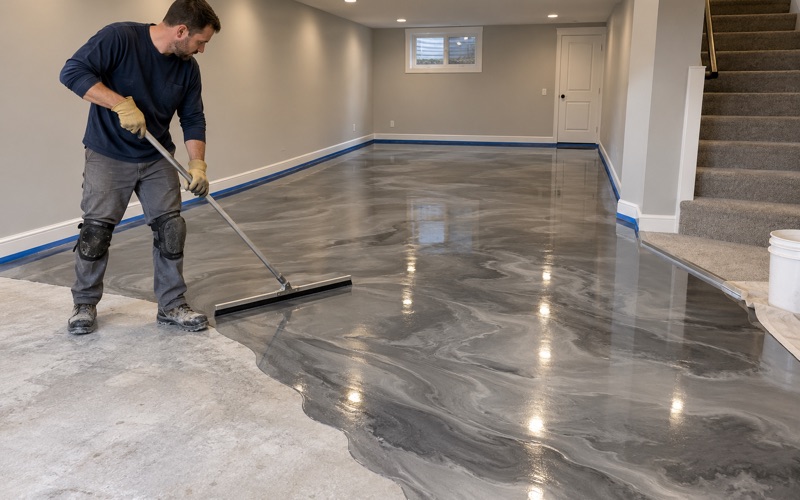
Once the slab is ground open and repaired, the goal is a sealed, non-dusting surface. On a floor that only needs to stop shedding, a lithium silicate densifier hardens the top of the concrete. Where the floor also takes spills and wheel traffic, a 100% solids epoxy system seals the pores outright and gives a crew a continuous surface to clean.
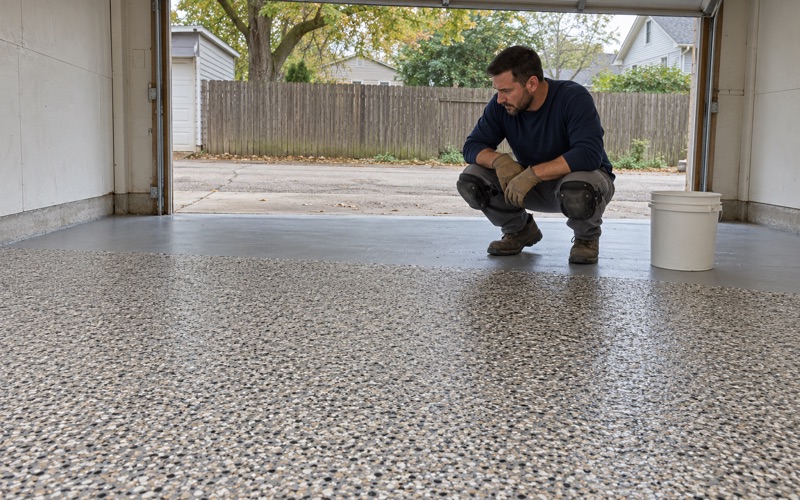
Texture is the trade-off. A heavy quartz aggregate broadcast gives grip but holds dust in every valley, so on a dust-control floor we keep the profile as smooth as footing allows. Where slip resistance matters, a fine texture in the topcoat usually serves better than coarse aggregate, and we talk through that balance with the people who sweep the floor.
None of this makes grain dust any less combustible. A coating changes how completely the floor gives dust up to a broom and a vacuum; it does not replace the housekeeping program, and we will not describe it as if it did. The written program and the crew’s routine are what keep accumulations below the line.
How the Finish Holds Up
Hard wheels, pallet jacks and grit tracked in from the yard slowly dull any topcoat, and a scuffed surface starts to hold dust the way bare concrete did. We plan handling floors so the topcoat can be abraded and recoated in place, section by section, before wear reaches the base coat. That keeps the floor sweepable for years rather than for the first season.
Spills, Scales and Inspection Areas
A transload floor is not one floor. The scale approach, the receiving area, the inspection space and the loading bays each take different traffic, and we would scope them separately rather than spread one system across all of them. Truck scale areas and dock edges take wheel loads and turning tires, and the inspection space takes something else entirely.
The Inspection Space
An inspection room where grain is sampled and graded sees spilled samples, foot traffic and carts rather than truck tires. There we would lean toward a smooth, light-colored epoxy so stray kernels and dust show at a glance, with coved edges at the walls so a broom has no corner to leave dust behind.
Truck Lanes and Winter Brine
Trucks that pull into a loading bay in winter bring calcium chloride brine and rock salt in on their tires. Salt residue mixed with grain dust can form a paste that clings to a rough or porous floor, so in truck lanes we favor a polyaspartic topcoat or a urethane cement system, and we keep the texture fine enough to scrub.
Moisture and Cure Timing
Moisture testing is a line item in our scope, not something sold after a floor blisters. On a dock or handling slab we use ASTM F2170 relative humidity probes set into the slab or ASTM F1869 calcium chloride testing, and where readings call for it, a moisture-mitigation primer goes down first. Warranty exclusions are read out before a job is sold, with moisture named first.
Curing is scheduled against slab temperature and the dew point spread at the slab surface, not the calendar. An open loading bay in a Cook County winter can sit too cold or too close to dew point for a resin to cure properly, and we will say so plainly rather than coat into conditions that cause amine blush or a soft film.
Working Around a Running Operation
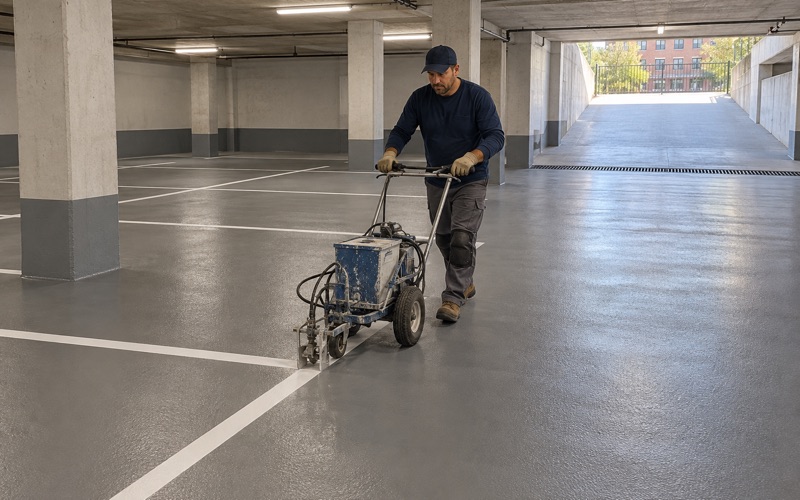
A transload that runs rail and truck traffic cannot hand over its whole floor for a week. We schedule commercial floors around the hours a building has to keep running, including overnight and weekend windows, and phase the work bay by bay so receiving, weighing and loading can continue on the sections not being coated.
Grinding dust is collected at the machine and never washed toward a drain, which matters doubly on a floor where the whole point is less dust. Coatings are chosen within the Illinois limit on VOC content, which binds the installer as well as the manufacturer. When the floor is done, it should come clean with the broom and vacuum the crew already owns.
- 20+ Years Coating Concrete
- Moisture Tested Before Quoting
- Written Contract on Every Home Job