Oak Park Epoxy Flooring brings more than 20 years of slab work to epoxy-flooring in Wood Dale, and the jobs that take the most planning here are floors that change temperature at a doorway. A slab running from a warm room into a cold one asks more of a coating than any open aisle does. We plan that crossing first and lay out the rest of the floor around it.
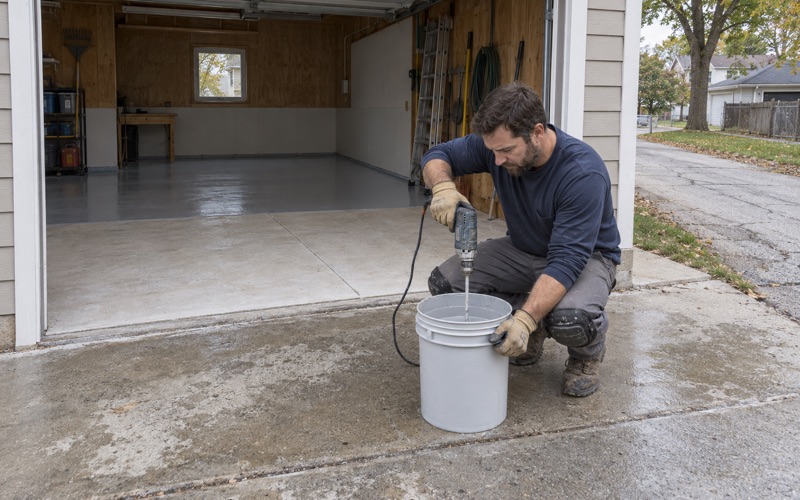
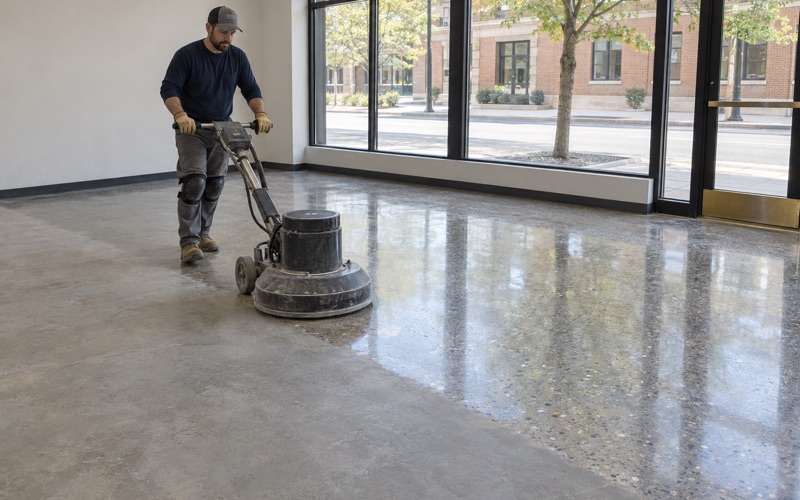
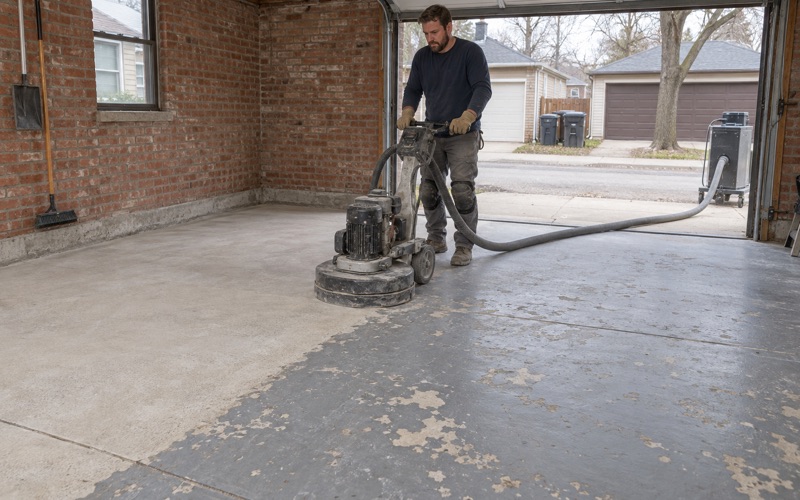
Every slab we coat is opened with a diamond grinder or a shot blaster, never with acid, so the resin bonds to sound concrete instead of a weak surface skin. Before we price anything, we read the cracks and any old coating on the floor. If a section needs repair or replacement before it can carry a coating, we say so in writing rather than covering the problem.
Our proposals name the product, the system build and the finished thickness, so a facility manager can check what was quoted against what went down. Moisture testing sits in the scope as its own line. The warranty exclusions are read out before the job is sold, and moisture is the first one we name.
Grocery Fulfillment on Mittel Boulevard
Wood Dale covers about 4.87 square miles of Addison Township, DuPage County, and its employer roll does not read like a typical warehouse town. As reported from the city’s 2025 principal-employer table, Prime Now LLC sits at the top with 705 employees, ahead of a clinical laboratory and a coding-printer maker. That top line is the reason this page is about cold rooms rather than dock lanes.
What the Address Tells Us
Amazon’s hiring site has carried Grocery Fresh Associate openings at 1250 N Mittel Blvd, describing a team that gets orders ready. Directories list the same address as Amazon Prime Now and an AmazonFresh distribution center, and the Census geocoder places it inside Wood Dale city. Whether grocery fulfillment still runs there today, and which temperature zones the building holds, are things we have not read.
We mention the building as a landmark, not as a client, because its layout and floors are unknown to us. One aggregator even says the pickup point at the address appears closed. What the address does is name a type of floor that any grocery or food-distribution operator in the city’s industrial areas will recognize.
Ambient, Chilled and Frozen Under One Roof
A grocery fulfillment floor is really three floors in one building. Ambient aisles hold dry goods at room temperature, a cooler holds produce and dairy, and a freezer holds frozen stock. Pickers and carts move between all three every shift, and each crossing carries air, moisture and traffic from one zone into the next.
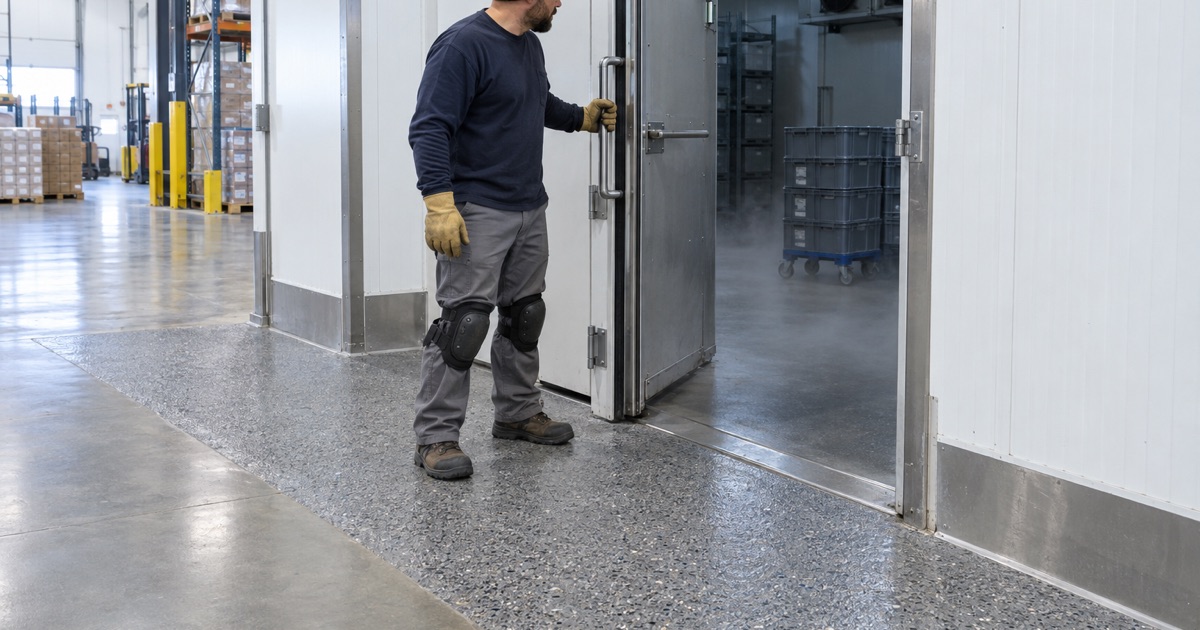
The open aisles are the easy part, and a smooth, cleanable resin system usually serves them well for years. The trouble concentrates in a band a few feet wide on either side of each cold-room door. That band is where we spend most of the budget and most of the planning on a floor like this.
Looking for epoxy-flooring closer to Hickory Hills? See Epoxy-Flooring in Hickory Hills.
What Happens at a Freezer Doorway
When a cooler or freezer door opens, cold dense air spills out low while warm humid air rolls in high. Trade literature describes the infiltrating moisture freezing on the floor, doors and walls nearest the opening. One climate-control vendor calls it a serious slip-and-trip hazard for staff and a traction problem for forklifts and pallet trucks.
Frost on the Cold Side
Inside freezer doorways, the moisture that rides in on warm air settles as frost and then glazes into ice on the slab. A floor that felt safe when the room was commissioned can turn slick within a shift of heavy door traffic. A high-gloss finish makes that worse, because ice sitting on a glassy surface gives a boot or a tire nothing to grip.
Condensate on the Warm Side
On the ambient side the problem turns wet rather than icy. An air-curtain patent notes that the mixing at the opening makes fog and wet slippery floors at the doorway, and a frost-control patent describes condensate forming on a freezer door’s warm face and dripping to the floor. That drip line lands in the same spot every time the door cycles.
Totes That Sweat
Carts add a third source of water. Totes that sat in the freezer come out cold-soaked, and as they warm on the ambient floor they sweat, leaving a trail past the doorway and into the first stretch of aisle. Anyone mapping the wet zone should walk the route a loaded cart takes, not just the door frame.
None of this is something a coating can stop, and we say so before any resin is discussed. Fast or self-closing doors, strip curtains, vestibules and threshold heating are what limit infiltration at the opening. A floor system can only make the moisture that does arrive safer to walk and drive through.
Texture and Cold-Rated Systems at the Threshold Band
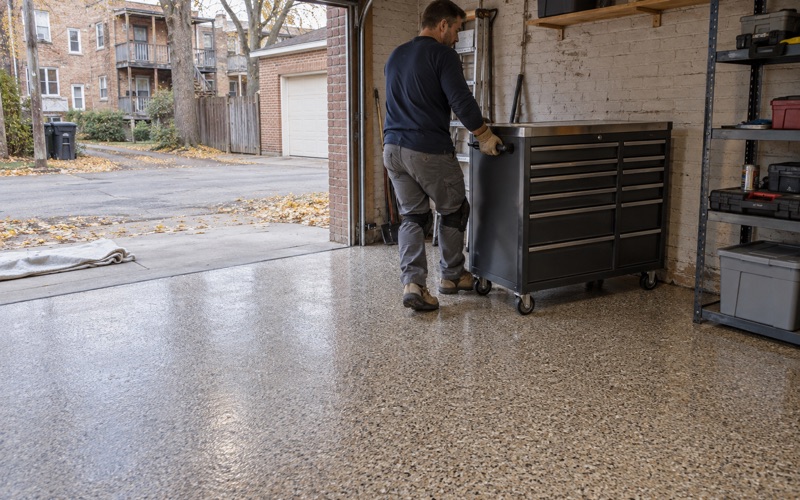
Because the hazard concentrates at the doors, the slip texture should too. We typically detail a quartz aggregate broadcast across each threshold, extending onto both the cold and warm sides, while the open ambient aisles stay smooth and easy to scrub. That split keeps cleaning simple where it can be and puts grip where people and wheels actually slide.
Choosing a System for the Cold Side
Not every resin is suited to the inside of a freezer. A standard 100% solids epoxy can turn brittle and lose bond under repeated thermal cycling, so on the cold side we lean toward urethane cement, which is built to tolerate low service temperatures and swings between warm and cold. The proposal names the product and its rated range so the choice can be checked later.
A slab that has sat under a long-running cold room can hold moisture that a quick look will not reveal. We run ASTM F2170 in-situ relative humidity probes where the room allows, and a moisture-mitigation primer goes into the build when the readings call for one. That testing is a line in the scope, not something offered after a blister appears.
Grip That Survives Traffic
Texture has to hold up to forklift and pallet-truck tires as well as boots. A coarse aggregate locked under a topcoat keeps its profile longer than a light sprinkle that wears smooth in the main wheel paths. We set the grit size against the traffic, since too aggressive a texture becomes a cleaning problem and too fine a one disappears within months.
Where the Band Meets the Aisle
The edge of the textured band gets a clean, deliberate termination line rather than a feathered edge that lifts and peels. Where the threshold crosses a construction joint or a door track, we leave the joint open or fill it with a flexible sealant instead of bridging it with rigid resin. Across a doorway that sees cold on one side and warmth on the other, a bridged joint is usually the first place a coating cracks.
Recoating a Cold Room Without Losing the Room
A freezer threshold cannot be warmed to a normal resin’s cure temperature while the room is running. That leaves two honest options for a recoat: a planned shutdown with the room emptied and brought up to temperature, or a cold-cure product made to set on a cold slab. We explain that tradeoff before anything is ordered.
Planning a Shutdown Window
A shutdown gives the cleanest result, because the slab can be ground, primed and coated under controlled conditions. It also means relocating stock, which a grocery operation will want to line up with its slowest days. We schedule overnight and weekend windows so the building keeps shipping while one door at a time is out of service.
Working a single doorway at a time is often the realistic path. The adjacent aisle stays open behind a barrier, and the threshold band is ground, coated and textured as one unit before the next door is touched. Each section is released only once the coating has cured enough to take carts and pallet trucks.
When Cold-Cure Is the Better Call
Some rooms cannot be emptied at all, and a cold-cure system lets us recoat while the freezer stays in service. The tradeoff is a narrower product range and closer attention to surface prep, because frost and condensate on the slab will ruin a bond before it starts. We dry and grind the area inside a temporary enclosure and verify the surface before any resin goes down.
Paperwork Before the First Pass
Any contractor working in Wood Dale must be registered with the city’s Community Development Department before a permit issues. Registration calls for a certificate of insurance carrying public liability coverage of $2,000,000 and naming the City of Wood Dale as certificate holder. Illinois issues no state license for flooring or coatings work, so we confirm the city’s own rules before a job goes on the calendar.
Settling registration early matters more on a cold-room job than almost anywhere else. A shutdown window often takes weeks of coordination with stock, staff and deliveries, and losing it to a missing certificate means starting that planning over. We would rather have the paperwork finished before the first freezer door is propped open.
- 20+ Years Coating Concrete
- Moisture Tested Before Quoting
- Written Contract on Every Home Job